

You’ve probably heard a story about a child with a serious peanut allergy, and now you’re wondering how to keep your own little one safe. Maybe a relative warned you to wait, while a friend told you the opposite. That mixed advice is confusing, and worrying about it is completely normal.

Here’s the good news: figuring out how to test peanut allergy on baby is more straightforward than it used to be. In this guide, you’ll learn why early introduction matters, exactly how to offer peanut for the first time, what reactions to watch for, and when to call your doctor. Let’s walk through it together.
Why This Matters for New Parents
Introducing peanut early can actually lower your baby’s risk of developing a peanut allergy. For years, parents were told to delay peanuts until age three. Research has since flipped that advice, and major guidelines now recommend introducing peanut-containing foods earlier for most babies.
Why the change: A large study found that babies who ate peanut foods early were far less likely to develop a peanut allergy than those who avoided them. Avoiding peanuts, it turns out, didn’t protect babies — it may have done the opposite.
That doesn’t mean you should rush in without a plan. It means you can approach this calmly, at home, with simple steps. And if your baby has certain risk factors, your doctor can guide the timing.
6 Step-by-Step Guide to Introducing Peanut
The safest first taste happens at home, on a calm day, when you can watch your baby closely. Here’s how to do it step by step.
Step 1: Talk to your doctor first if your baby is higher risk
Most babies can try peanut at home without any testing. But some need a check-in first.

Higher-risk signs: severe eczema (very dry, irritated skin that’s hard to control), an existing egg allergy, or both. If either applies, ask your doctor before introducing peanut. They may suggest an allergy test or supervised first try.
Step 2: Make sure your baby is ready for solids
Your baby should already be eating other solid foods without trouble before you try peanut. Signs of readiness include sitting up with support, good head control, and showing interest in food.
Tip: Introduce a few simple single foods first, like infant cereal or pureed vegetables. This way you know your baby tolerates solids before peanut enters the picture.
Step 3: Choose a safe peanut form
Never give whole peanuts or chunks of peanut to a baby — they’re a choking hazard. Instead, use a smooth, baby-friendly form.
Good options:
- Smooth peanut butter thinned with warm water, breast milk, or formula
- Peanut butter stirred into a fruit or vegetable puree your baby already eats
- Peanut puff snacks softened until they dissolve easily
Step 4: Start with a small amount
Offer a tiny taste first, then wait. A small amount on the tip of a spoon is plenty for the first try.
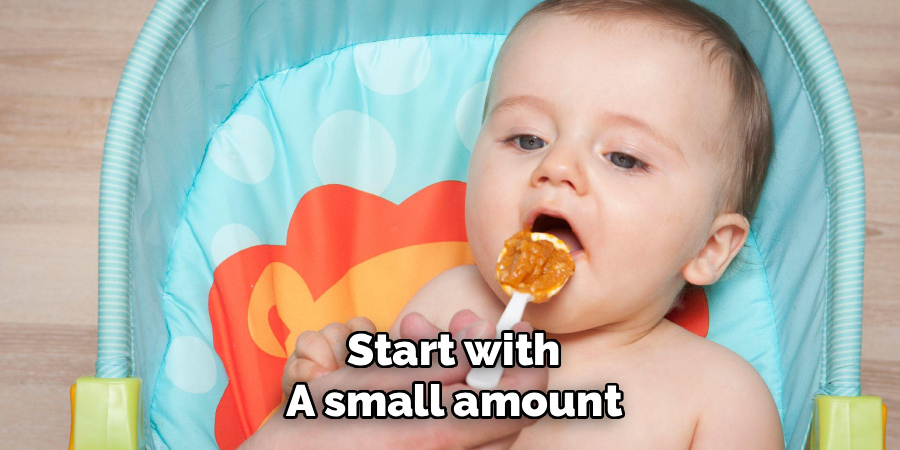
How to do it: Give a little, then watch for about 10 minutes. If your baby seems fine, you can offer the rest of the small serving.
Step 5: Pick a good time and watch closely
Try peanut in the morning or early afternoon, not right before bed. This gives you the full day to notice any reaction while you’re alert.
Tip: Do it on a day when you’re home and not distracted. Avoid trying peanut for the first time when your baby is sick, teething badly, or already fussy — it’s harder to tell what’s causing what.
Step 6: Keep it going
If the first taste goes well, that’s not the finish line. To keep the protection going, offer peanut foods regularly — a few times a week is a common recommendation.
Why: Staying consistent helps maintain tolerance. One taste and then months of avoidance can undo the benefit.
Age-Specific Advice
The right timing depends partly on your baby’s age and risk level. Here’s how to think about it.
4 to 6 Months
This window is mainly for higher-risk babies. If your baby has severe eczema or an egg allergy, current guidelines suggest introducing peanut around 4 to 6 months — but only after talking to your doctor.
Important: Your baby still needs to be developmentally ready for solids. Don’t push peanut earlier than your baby is ready to eat any solid food.
6 Months and Older
For most babies with no major risk factors, around 6 months is a comfortable time to introduce peanut. By then, many babies are eating a range of solids and have shown they can handle them.
Keep it simple: Mix smooth peanut butter into foods your baby already enjoys. There’s no need to delay past 6 months for fear of allergy — waiting longer offers no added protection and may raise the risk.
Common Mistakes to Avoid
A few simple missteps can make peanut introduction more stressful than it needs to be. Here’s what to watch for.
Mistake 1: Giving whole peanuts or large blobs of peanut butter. Both are choking hazards for babies. Always use smooth, thinned, or dissolvable forms instead.
Mistake 2: Skipping the doctor check for high-risk babies. If your baby has severe eczema or an egg allergy, introducing peanut without guidance isn’t ideal. A quick conversation first keeps things safe.
Mistake 3: Trying it for the first time away from home. A daycare drop-off or a restaurant isn’t the place for a first taste. Do it at home where you can watch closely and respond quickly.
Mistake 4: One-and-done introduction. Offering peanut once and then stopping can undo the benefit. Keep it in your baby’s regular diet a few times a week.
Mistake 5: Mistaking normal mess for a reaction. A little redness around the mouth from rubbing food on the skin is common and often harmless. A true allergic reaction usually involves more than a small smear of redness — more on that below.
Safety Tips
A calm setup makes the whole experience easier and safer. Keep these reminders in mind.
- Pick a calm, healthy day. Avoid days when your baby is sick or very fussy.
- Introduce one new food at a time. This makes it easier to spot the cause if a reaction happens.
- Stay nearby for two hours. Most serious reactions show up within this window, so keep your baby in sight.
- Know your plan. Have your doctor’s number handy and know the local emergency number before you start.
- Never force it. If your baby refuses, try again another day. There’s no rush.
When to Call a Doctor
Most babies have no reaction at all. But knowing the warning signs lets you act quickly and confidently if one appears.
Mild signs to watch for: a few hives (raised, itchy bumps) around the mouth, mild redness, or a small amount of vomiting. Call your doctor for advice if you notice these — they can guide your next steps.
Get emergency help right away if your baby shows any of these signs of a severe reaction:
- Swelling of the lips, tongue, or face
- Trouble breathing, wheezing, or noisy breathing
- Widespread hives or a spreading rash
- Repeated vomiting
- Sudden tiredness, floppiness, or pale or blue skin
- Coughing, choking, or a hoarse cry
These can be signs of anaphylaxis — a serious, fast-moving allergic reaction. Call your local emergency number immediately. It’s always better to get help and be reassured than to wait.
Frequently Asked Questions
When should I introduce peanut to my baby?
For most babies, around 6 months is fine. For higher-risk babies — those with severe eczema or an egg allergy — guidelines suggest 4 to 6 months, after talking to your doctor. Your baby should be ready for solids first.
Do I need an allergy test before giving peanut?
Most babies don’t need testing. Testing is usually recommended only for higher-risk babies. Your doctor can tell you whether your little one needs a check first.
What’s the safest way to give peanut to a baby?
Use smooth peanut butter thinned with water, breast milk, or formula, or mixed into a familiar puree. Avoid whole peanuts and thick spoonfuls of peanut butter, since both can cause choking.
How much peanut should my baby eat?
Start with a tiny taste on the first try and watch closely. After that, offering peanut foods a few times a week helps maintain the protective benefit. Your doctor can suggest amounts that fit your baby.
What if my baby already has eczema?
Eczema, especially severe eczema, is a risk factor for food allergy. Talk to your doctor before introducing peanut. They may recommend a test or a supervised first try to keep things safe.
Final Thoughts
Learning how to test peanut allergy on baby comes down to a few calm, simple steps: check with your doctor if your baby is higher risk, choose a safe form, start small, and watch closely. For most families, that first taste passes without any drama at all.
You’re already doing the most important thing — paying attention and planning ahead. Take it one small spoonful at a time, trust your instincts, and lean on your doctor whenever you have questions. You’ve got this.

About
Joann Meril didn’t plan on becoming a parenting writer — it found her. After spending several years working as a certified nursing assistant in a pediatric clinic, Joann saw firsthand how anxious and under-informed new parents could feel, even with a hospital full of resources around them. When she had her own two children, that gap became personal. Suddenly she was the one googling things at 2 a.m., comparing baby monitors, and wondering if the swaddle she bought was actually safe.
That experience is what shaped her approach to writing. Joann believes parenting advice should be practical, honest, and free of unnecessary jargon or guilt. She tests products herself whenever possible, reads the actual safety standards instead of just the marketing copy, and isn’t afraid to say when something isn’t worth the money.
Today, Joann writes full-time, covering everything from newborn sleep routines to gear reviews to the small everyday wins that make parenting feel a little less overwhelming. When she’s not researching or writing, she’s usually chasing her own kids around the backyard or drinking coffee that’s gone cold for the third time that morning.
Joann lives in [City/State] with her husband and two children.
Credibility
- Background in pediatric caregiving (CNA)
- Mom of two, hands-on parenting experience
- Hand-tests baby gear before recommending it
- Focus: infant sleep, feeding, gear safety, early development