
That tiny belly button can feel like a big mystery. One day there’s a little stump, the next there’s a healing spot you’re almost afraid to touch. If you’ve found yourself staring at it, wondering whether you’re doing things right, you’re in good company.
The good news is that cleaning your baby’s belly button is simpler than it looks. In this guide, you’ll learn exactly what to do, what to avoid, and when to check in with your doctor. Let’s walk through it together, one calm step at a time.
Why This Matters for New Parents
Your baby’s belly button needs a little attention because it’s a healing area. After birth, the umbilical cord — the tube that connected your baby to you during pregnancy — is clamped and cut. What’s left is a small stump that dries up and falls off over the first couple of weeks.
Keeping this area clean and dry helps it heal smoothly and lowers the chance of infection. That’s the whole reason this small task matters so much in those early days.
It’s completely normal to feel nervous about it. The stump can look dark, crusty, or even a little odd, and that’s expected. You’re not going to hurt your baby by gently caring for this spot, and a calm, simple routine is all it takes.
What You’ll Need
You don’t need fancy products to clean your baby’s belly button. In most cases, less is more. Here’s a short list of helpful supplies:
- Clean water: Plain, lukewarm water is usually all you need.
- Soft cotton balls or a soft washcloth: For gentle wiping.
- Cotton swabs: Useful for the folds once the stump has fallen off.
- A clean, dry towel: To pat the area dry.
- A fresh diaper: Ideally one you can fold down to keep the area uncovered.
You generally don’t need rubbing alcohol or antiseptic wipes. Most pediatric guidance now favors keeping things dry and clean rather than dabbing on alcohol, which can slow healing. If your doctor gives you specific instructions, follow those first.
6 Step-by-Step Guide on How to Clean Baby Belly Button
Here’s a simple routine you can follow during the stump stage and after it falls off. Go slowly and stay relaxed — your baby picks up on your calm.
Step 1: Wash Your Hands
Start with clean hands every time. This is the easiest way to keep germs away from a healing area. A quick wash with soap and water does the job.
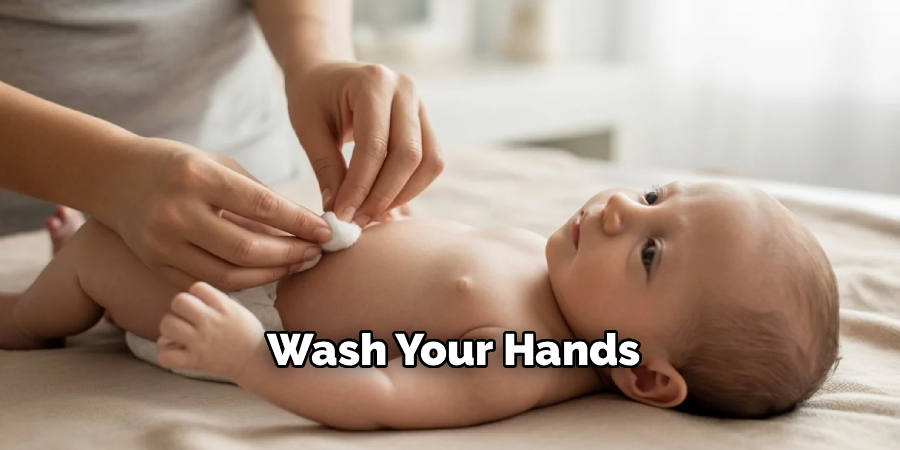
Tip: Make this your automatic first move, just like before a diaper change.
Step 2: Check the Area Gently
Take a look at the belly button before you touch anything. You’re checking for the normal stuff — a drying stump, light crusting, or a small bit of clear fluid. Knowing what’s normal helps you spot anything unusual later.
Step 3: Clean Around It (Stump Stage)
While the stump is still attached, your main job is to keep it clean and dry, not to scrub it. If there’s mild crusting or some discharge, dampen a cotton ball with plain water and gently wipe around the base.
Tip: Wipe around the stump, not directly under it. There’s no need to force it or pull at it.
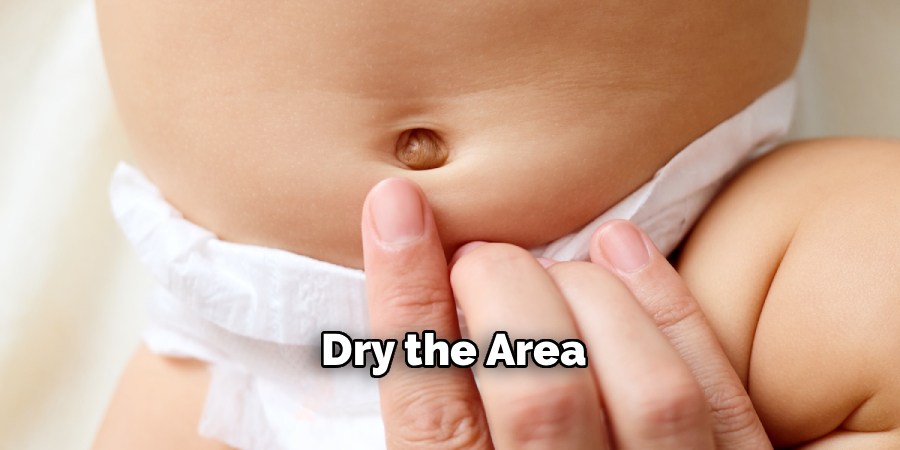
Step 4: Dry the Area
Pat the spot dry with a clean towel or let it air-dry for a minute. Moisture is the enemy of smooth healing, so dryness is your goal. A few moments of air can make a real difference.
Step 5: Clean the Belly Button (After the Stump Falls Off)
Once the stump drops off, you’ll have a small belly button with little folds. You can gently clean inside with a damp cotton swab or the corner of a soft cloth.
Tip: Be gentle and don’t dig deep. A light wipe around the visible folds is plenty.
Step 6: Fold the Diaper Down
Until the area is fully healed, fold the front of the diaper below the belly button. This keeps it exposed to air and away from pee. Many newborn diapers have a little notch designed for exactly this.
Age-Specific Advice
Your approach shifts a little as your baby grows. Here’s what to expect at each stage.
Newborn (0–3 Weeks)
This is the stump stage. Keep the area clean and dry, fold the diaper down, and stick to sponge baths until the stump falls off. The stump usually drops away on its own within one to three weeks.
1–3 Months
By now, the stump has likely fallen off and the belly button is healing or healed. You can begin regular baths and gently clean the area as part of bath time. Continue to dry it well afterward.
3–6 Months
At this stage, the belly button is fully healed for most babies. A quick wipe during baths is all it needs. There’s no special routine required anymore.
6+ Months
Now your baby is more active, and the belly button is just another part of regular washing. As babies start solids and get messier, a gentle clean during bath time keeps it fresh. Lint and fuzz can collect in there, so a soft wipe now and then is helpful.
Common Mistakes to Avoid
A few small habits can slow healing or cause worry. Here are the ones to watch for.
- Pulling at the stump: It might look ready to come off, but tugging can cause bleeding and pain. Let it fall away naturally.
- Over-cleaning: Scrubbing or cleaning too often can irritate the skin. Gentle and occasional is better than frequent and forceful.
- Keeping the area too wet: Trapping moisture under the diaper or skipping the drying step can slow healing. Aim for clean and dry.
- Covering it with the diaper: A diaper rubbing against the stump adds friction and moisture. Fold it down instead.
- Using alcohol without guidance: Routine alcohol dabbing is no longer recommended for most babies. Stick with plain water unless your doctor advises otherwise.
Safety Tips
A few simple habits keep this whole process safe and stress-free.
- Always wash your hands first. Clean hands are your best protection against infection.
- Be gentle. Light touches only — no scrubbing, picking, or pulling.
- Keep it dry. Air is your friend; moisture is not.
- Skip the harsh products. Avoid lotions, powders, or antiseptics on the area unless your doctor recommends them.
- Never submerge the stump. Stick to sponge baths until it falls off.
Signs You’re Doing It Right
Wondering whether things are on track? Here are reassuring signs that your care is working.
- The stump looks progressively drier and darker before falling off.
- There’s little to no smell, or only a mild one.
- Any clear fluid is minimal and fading over time.
- The surrounding skin looks normal — not red, swollen, or warm.
- The stump falls off on its own within about one to three weeks.
If you’re seeing these, you’re doing a great job. Healing takes a little time, and patience is part of the process.
When to Call a Doctor
Most belly buttons heal without any trouble. Still, it helps to know the signs that deserve a call to your pediatrician. Contact your doctor if you notice:
- Redness or swelling spreading around the belly button.
- Pus or cloudy, yellow discharge, especially with a foul smell.
- Bleeding that doesn’t stop with gentle pressure.
- Fever in your baby, which can be a sign of infection.
- A pink, moist lump at the navel that lingers after the stump falls off — sometimes called a granuloma, a small bit of leftover healing tissue.
- Pain or fussiness when the area is touched.
- A stump that hasn’t fallen off after three to four weeks.
When in doubt, reach out. Your doctor would always rather answer a quick question than have you worry alone.
Frequently Asked Questions
How often should I clean my baby’s belly button?
You don’t need to clean it daily. During the stump stage, simply keep it dry and wipe only if you see crusting or discharge. After healing, a gentle clean during regular baths is enough.
Can I give my baby a bath before the stump falls off?
Stick to sponge baths until the stump drops away on its own. Submerging the area keeps it wet and can delay healing. Once it’s gone and the spot looks healed, regular baths are fine.
Is it normal for the belly button to smell?
A mild smell can happen as the stump dries and heals. A strong, foul odor along with redness or discharge is different and worth a call to your doctor. Trust your nose here.
What if I see a little blood when the stump falls off?
A few small spots of blood are common and usually nothing to worry about. Gently keep the area clean and dry. If bleeding is more than a few drops or keeps happening, check with your pediatrician.
Should I use rubbing alcohol on the stump?
For most babies, no. Current guidance favors keeping the area clean and dry rather than using alcohol, which can actually slow healing. Follow your doctor’s advice if they suggest something specific.
Final Thoughts on How to Clean Baby Belly Button
Caring for your baby’s belly button comes down to a few gentle habits: keep it clean, keep it dry, and let nature do most of the work. The stump will fall off in its own time, and the small spot left behind will heal beautifully.
You don’t need special products or a complicated routine — just clean hands, a soft touch, and a little patience. If something ever looks off, your pediatrician is one phone call away.
You’re already doing the most important thing by caring enough to learn. Trust yourself, take it slow, and know that you’ve got this.

About
Joann Meril didn’t plan on becoming a parenting writer — it found her. After spending several years working as a certified nursing assistant in a pediatric clinic, Joann saw firsthand how anxious and under-informed new parents could feel, even with a hospital full of resources around them. When she had her own two children, that gap became personal. Suddenly she was the one googling things at 2 a.m., comparing baby monitors, and wondering if the swaddle she bought was actually safe.
That experience is what shaped her approach to writing. Joann believes parenting advice should be practical, honest, and free of unnecessary jargon or guilt. She tests products herself whenever possible, reads the actual safety standards instead of just the marketing copy, and isn’t afraid to say when something isn’t worth the money.
Today, Joann writes full-time, covering everything from newborn sleep routines to gear reviews to the small everyday wins that make parenting feel a little less overwhelming. When she’s not researching or writing, she’s usually chasing her own kids around the backyard or drinking coffee that’s gone cold for the third time that morning.
Joann lives in [City/State] with her husband and two children.
Credibility
- Background in pediatric caregiving (CNA)
- Mom of two, hands-on parenting experience
- Hand-tests baby gear before recommending it
- Focus: infant sleep, feeding, gear safety, early development