
Cycling with your little one can turn a simple ride into a calm, memorable outdoor routine. You get fresh air, gentle exercise, and a new way to explore parks, campgrounds, and quiet neighborhood paths together. Still, learning how to ride a bike with a baby takes more planning than a solo ride. You need the right gear, a stable setup, a safe route, and a slow approach while you build confidence.
The good news is that you do not need to be an expert cyclist to start. You just need to understand age-appropriate equipment, helmet fit, balance, braking, and basic safety checks. This guide will show you how to prepare, practice, and ride safely with your baby from the first setup to your first short family outing.
Why Learning to Bike With a Baby Matters
For campers and outdoor beginners, biking with a baby opens up more ways to move around without relying on a car. Around a campground, a bike can help you reach the bathhouse, trailhead, picnic area, or lake path while keeping your baby close and comfortable.
It also helps you build family cycling habits early. Short rides can become part of weekend trips, nature walks, and low-key exercise. When you know how to choose a child bike seat or bike trailer, check local laws, read weather conditions, and ride on a low-traffic path, you gain freedom without guessing.
This skill matters because it turns outdoor time into something practical, safe, and repeatable.
Tools and Materials You’ll Need
- A well-maintained bike that fits you and handles smoothly under extra weight.
- An age-appropriate child bike seat or bike trailer that meets current safety standards.
- A properly fitted baby helmet, if your child is old enough and local rules require or allow helmet use.
- A secure harness system with straps that sit flat and snug.
- A tire pump with a pressure gauge for checking tire pressure before each ride.
- A small repair kit with a spare tube, tire levers, and a compact multi-tool.
- Weather-appropriate baby clothing, sun protection, and a light blanket if conditions are cool.
- Water, diapers, wipes, and a small snack if your baby is old enough.
- Optional convenience item: a handlebar mirror to help you monitor traffic and your riding position more easily.
8 Step-by-Step Guide on How to Ride a Bike With a Baby
Step 1 – Check Age, Development, and Local Rules
Start by making sure your baby is ready for cycling equipment. Many child bike seat and bike trailer makers set age, weight, and developmental requirements. Your baby should have the head and neck control needed for the setup you choose.
Check local laws before your first ride. Some places have rules about baby helmets, trailer use, road access, and minimum passenger age. Campgrounds may also limit bikes to certain paths.
This early research may feel slow, but it protects your ride from surprises. It is the first practical step in how to ride a bike with a baby with confidence instead of guesswork.
Step 2 – Choose the Right Baby Carrying Setup
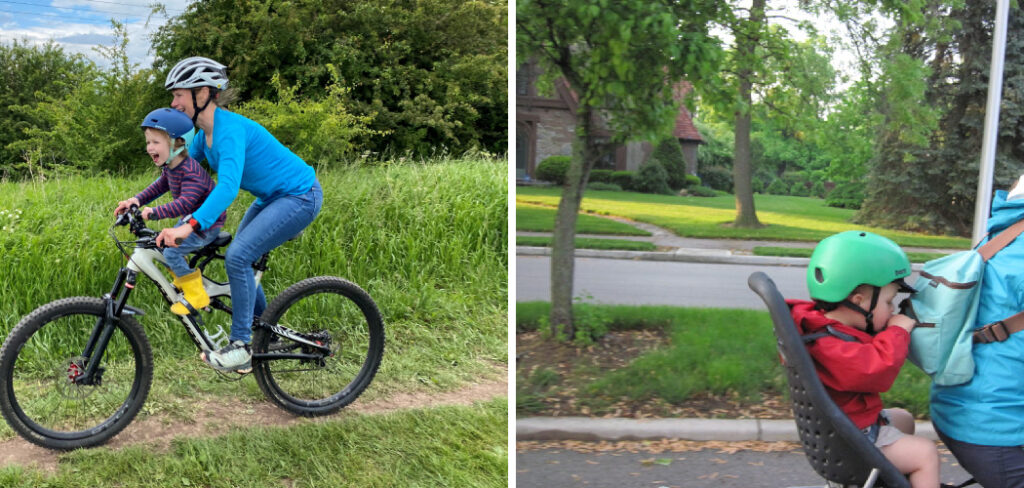
Pick a setup that matches your bike, your riding area, and your baby’s stage. A rear-mounted child bike seat keeps your baby close and compact, but it changes your balance more than you may expect. A front-mounted seat gives you easier visibility, though it may affect your pedaling space.
A bike trailer often feels more stable for beginners because it sits low and carries gear well. It can be useful on campground roads and paved paths.
Before buying, confirm weight limits, mounting style, harness design, and bike compatibility. The best option is not the fanciest one. It is the one you can install correctly and use calmly.
Step 3 – Fit the Helmet and Harness Correctly
Helmet fit matters every time. The helmet should sit level on your baby’s head, low on the forehead, and snug without pressing hard. The straps should form a clean “V” around the ears, with the chin strap secure enough that the helmet does not slide.
If your baby is using a seat or trailer with a harness, buckle it before every ride. Straps should lie flat across the shoulders and hips. You should not see twisting, sagging, or loose gaps.
Take your time here. The soft click of the buckle and the steady feel of the helmet should become part of your pre-ride rhythm.
Step 4 – Perform a Full Bike Safety Check
Before adding your baby, check the bike by itself. Squeeze both brakes and make sure they stop the wheels firmly. Spin the tires and look for cracks, low pressure, or rubbing. Check tire pressure with a gauge, not just your hand.
Look at the seat, handlebars, pedals, chain, and attachment points. If you use a trailer, confirm the hitch is locked and the safety strap is attached. If you use a child bike seat, check the mounting bracket and all fasteners.
A safety check only takes a few minutes, but it can prevent a wobbly, noisy, or stressful ride.
Step 5 – Practice Riding With Extra Weight First
Do not make your first loaded ride a family outing. Practice with the empty child seat or trailer first. If possible, add a small weighted bag to mimic the extra load.
Ride in a quiet parking lot or smooth driveway. Notice how the bike feels when you start, turn, coast, and stop. A rear seat may make the bike feel top-heavy. A trailer may feel wider behind you, especially around corners.
Listen to the hum of the tires and the sound of the hitch or seat. Smooth, predictable movement tells you the setup is working well. Practice until starting and braking feel steady.
Step 6 – Pick a Short, Low-Traffic Route
Choose an easy route for your first ride with your baby. A flat, paved, low-traffic path works best. Avoid steep hills, loose gravel, sharp turns, busy roads, and crowded trail sections until you have more experience.
Keep the ride short, even if you feel excited. Ten to fifteen minutes is enough for a first outing. Your goal is not distance. Your goal is comfort, control, and a calm baby.
A key part of how to ride a bike with a baby is choosing a route that gives you time to think. Quiet paths help you focus on balance, braking, and your baby’s cues.
Step 7 – Start Slowly and Ride Smoothly
Begin with a gentle push-off and keep your pace relaxed. Sudden starts can feel jerky for your baby and unstable for you. Keep both hands on the handlebars and look ahead, not down at the front wheel.
Brake earlier than you would when riding alone. Extra weight changes stopping distance, especially with a trailer or rear seat. Take wide turns, avoid quick swerves, and slow down before bumps or uneven pavement.
Pay attention to your baby’s sounds and body language. If your baby fusses, slumps, or seems uncomfortable, stop in a safe spot and check the harness, helmet, temperature, and diaper.
Step 8 – Build a Simple Post-Ride Routine
After the ride, unbuckle your baby before handling gear or bags. Check for red marks from straps, signs of overheating, or any discomfort. A calm post-ride cuddle can help your baby connect biking with a safe, pleasant routine.
Then inspect your equipment. Look at the harness, buckles, helmet, tires, hitch, and seat mount. Dust, sand, and campground grit can collect faster than you expect.
Make a quick note of what worked. Maybe the route was too sunny, the blanket was too warm, or the trailer carried supplies well. Small adjustments help your next ride feel easier.
Common Mistakes When Riding a Bike With a Baby
One common mistake is rushing into a long ride too soon. Even if you are comfortable on a bike, your baby needs time to adjust to the helmet, harness, motion, wind, and outdoor sounds. Start small and build from there.
Another mistake is skipping the equipment manual. Child seats and trailers may look simple, but each model has specific age requirements, weight limits, installation steps, and harness rules. Guessing can lead to poor fit or unstable handling.
Some beginners choose routes based on scenery instead of safety. A beautiful path may still have steep grades, blind curves, loose gravel, or heavy foot traffic. Choose calm, predictable routes before you chase the best view.
Finally, many parents forget how much weather affects babies. Wind, heat, cold, and direct sun can change quickly on a ride. Dress your baby in layers, check often, and turn back early if conditions shift.
Expert Tips
Keep your first few rides boring in the best way. Use the same short route, the same gear setup, and the same pre-ride checklist until everything feels natural. Repetition builds confidence.
Pack lighter than you think, but never skip essentials like diapers, wipes, water, and weather protection. Extra weight affects balance and braking, so keep heavy items low and secure.
If you ride near a campground, choose times when roads are quieter, such as midmorning or early evening. Avoid peak arrival times when cars, RVs, and pedestrians crowd the lanes. For family cycling, calm timing often matters as much as the route itself.
Frequently Asked Questions
What age can a baby ride in a bike seat or trailer?
Age depends on your baby’s development, the equipment instructions, and local laws. Many setups require strong head and neck control, and some have minimum age or weight rules. Always read the manufacturer’s guide before riding. If you are unsure whether your baby is ready, ask your pediatrician before using a child bike seat or bike trailer.
Is a child bike seat or bike trailer better for beginners?
A bike trailer often feels more stable for many beginners because it sits low and does not shift your balance as much. A child bike seat can work well too, but it may make starts, stops, and turns feel different. The better choice depends on your bike, route, storage needs, and comfort with handling extra weight.
Does my baby need a helmet in a bike trailer?
Helmet rules vary by location and by equipment type. Some local laws require helmets for young passengers, while some trailer makers give specific guidance based on age and fit. A helmet must fit correctly to work well. Check your local regulations and the trailer instructions before you ride, especially with infants or very young babies.
How far should the first ride be?
Keep the first ride short, usually around 10 to 15 minutes. Choose a smooth, flat, low-traffic path close to home, camp, or your car. The first ride is mainly a comfort test for you and your baby. If everything goes well, you can slowly add time over future rides.
What weather is best for biking with a baby?
Mild, dry weather is best. Avoid extreme heat, strong wind, heavy rain, icy paths, and direct midday sun. Babies can get cold or overheated faster than adults, especially when sitting still in a trailer or seat. Dress in light layers, use shade when possible, and stop often to check your baby’s comfort.
Conclusion
Biking with your baby can be a gentle, practical way to enjoy the outdoors together. Start with the basics: choose age-appropriate equipment, follow local laws, fit the helmet and harness correctly, and check your bike before every ride. Then practice slowly before adding longer routes or more varied terrain.
The safest rides usually feel simple. You choose a low-traffic path, watch the weather conditions, brake early, and keep your baby comfortable from start to finish. As your confidence grows, cycling can become part of camping trips, park visits, and everyday family routines.
As you practice how to ride a bike with a baby, focus on calm progress rather than speed or distance. A short, smooth ride done well is a strong start. With preparation and patience, you can build a safe outdoor habit your family enjoys together.

About
Joann Meril didn’t plan on becoming a parenting writer — it found her. After spending several years working as a certified nursing assistant in a pediatric clinic, Joann saw firsthand how anxious and under-informed new parents could feel, even with a hospital full of resources around them. When she had her own two children, that gap became personal. Suddenly she was the one googling things at 2 a.m., comparing baby monitors, and wondering if the swaddle she bought was actually safe.
That experience is what shaped her approach to writing. Joann believes parenting advice should be practical, honest, and free of unnecessary jargon or guilt. She tests products herself whenever possible, reads the actual safety standards instead of just the marketing copy, and isn’t afraid to say when something isn’t worth the money.
Today, Joann writes full-time, covering everything from newborn sleep routines to gear reviews to the small everyday wins that make parenting feel a little less overwhelming. When she’s not researching or writing, she’s usually chasing her own kids around the backyard or drinking coffee that’s gone cold for the third time that morning.
Joann lives in [City/State] with her husband and two children.
Credibility
- Background in pediatric caregiving (CNA)
- Mom of two, hands-on parenting experience
- Hand-tests baby gear before recommending it
- Focus: infant sleep, feeding, gear safety, early development