
Your baby feels warm, and your heart skips a beat. You press your lips to their forehead, reach for the thermometer, and suddenly every worry rushes in at once. Take a breath — you’re doing exactly what a caring parent should.
A fever is one of the most common reasons new parents panic, but it’s usually a sign your baby’s body is working the way it should. In this guide, you’ll learn how to reduce baby fever safely at home, what supplies to keep on hand, age-specific tips, and the warning signs that mean it’s time to call your doctor.
Why This Matters for New Parents
A fever can feel frightening, especially the first time. But a fever isn’t an illness on its own — it’s your baby’s natural response to fighting off germs.
Here’s the part that helps most parents relax: the number on the thermometer matters less than how your baby looks and acts. A baby with a mild fever who is still feeding, smiling, and resting is usually okay. A baby who seems very limp, unusually fussy, or hard to wake needs closer attention.
Knowing how to respond calmly does two things. It keeps your baby comfortable, and it helps you tell the difference between “we can handle this at home” and “we need a doctor now.”
What You’ll Need
Having a few simple items ready makes everything easier. You don’t need anything fancy — just the basics within reach.
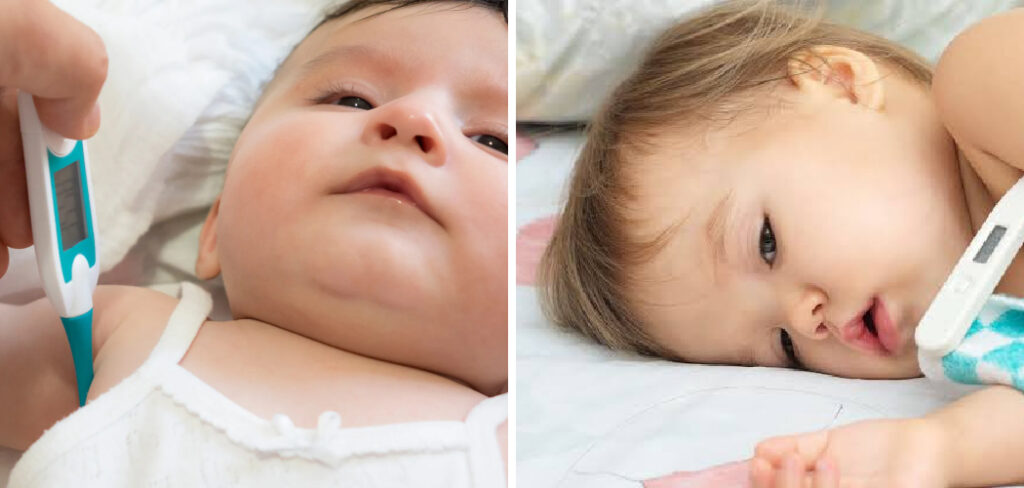
- Digital thermometer: A rectal thermometer gives the most accurate reading for babies under 3 months. For older babies, a forehead or armpit thermometer works well.
- Infant fever medicine: Acetaminophen (Tylenol) for babies over 2 months, or ibuprofen (Motrin) for babies over 6 months. Always check with your doctor before giving any medicine, especially to a newborn.
- A medicine syringe or dropper: This helps you give the exact dose.
- Lightweight clothing and a thin blanket: For comfort without overheating.
- Plenty of fluids: Breast milk or formula for younger babies, plus water for babies over 6 months.
- A lukewarm washcloth: For gentle sponging if needed.
Keep a small notebook or use your phone to jot down temperatures and medicine times. When you’re tired, it’s easy to lose track.
8 Step-by-Step Guide on How to Reduce Baby Fever
Follow these steps in order. Go slowly, and trust yourself along the way.
1. Take an accurate temperature.
Use your thermometer the way it’s designed to be used. A reading of 100.4°F (38°C) or higher counts as a fever. Write down the number and the time.
Tip: For babies under 3 months, a rectal reading is the gold standard. Lubricate the tip and insert gently no more than half an inch.
2. Check how your baby is acting.
Look beyond the number. Is your baby alert, feeding, and responsive? That’s reassuring. Note any other symptoms like a rash, cough, or pulling at the ears.
3. Dress your baby lightly.
Bundling up traps heat and can push the fever higher. One light layer is plenty. If your baby feels chilled and shivers, add a thin blanket briefly.
4. Offer fluids often.
Fevers cause babies to lose more fluid. Offer breast milk or formula more frequently than usual. For babies over 6 months, small sips of water help too.
Tip: Wet diapers are your hydration scorecard. Fewer than usual is a sign to offer more fluids.
5. Keep the room comfortable.
Aim for a cool, calm space — not cold. A fan set on low and pointed away from your baby can help the air feel fresh.
6. Consider fever medicine if your baby is uncomfortable.
If your baby is fussy or clearly miserable, the right dose of acetaminophen or ibuprofen can help. Use your baby’s weight to find the correct dose, and confirm it with your pediatrician.
Tip: Never give medicine to lower a fever in a baby under 2 months without talking to a doctor first.
7. Try a lukewarm sponge bath if needed.
For a high fever, a gentle sponge bath with lukewarm water can soothe. Never use cold water or rubbing alcohol — both can do more harm than good.
8. Rest and recheck.
Let your baby rest. Recheck the temperature every few hours and after giving medicine to see if it’s coming down.
Age-Specific Advice
How you respond depends a lot on your baby’s age. Younger babies need a faster, more cautious approach.
Newborns (Under 1 Month)
Any fever in a newborn is an emergency. A temperature of 100.4°F (38°C) or higher means you should call your doctor or go to the emergency room right away. Newborns have developing immune systems, so a fever needs to be checked immediately — do not give medicine on your own first.
1–3 Months
Treat fevers in this age group seriously. Call your pediatrician for any fever of 100.4°F (38°C) or higher, even if your baby seems fine. Your doctor will guide you on whether your baby needs to be seen and whether any medicine is appropriate.
3–6 Months
You have a little more room here, but stay attentive. Acetaminophen may be an option with your doctor’s okay. Focus on comfort, fluids, and light clothing, and call your doctor if the fever rises above 102°F (38.9°C) or lasts more than a day.
6 Months and Older
At this age, most fevers can be managed at home. Both acetaminophen and ibuprofen are usually safe with proper dosing. Watch your baby’s behavior, keep them hydrated, and call your doctor if the fever lasts more than two to three days or your baby seems unwell.
Common Mistakes to Avoid
Even loving, attentive parents slip up when they’re tired and worried. Here are the most common mistakes — and what to do instead.
- Over-bundling your baby. Piling on layers traps heat and raises the fever. Instead, dress your baby in one light layer.
- Using cold water or alcohol rubs. These can cause shivering or be absorbed through the skin. Use a lukewarm sponge bath instead.
- Giving the wrong dose of medicine. Babies are dosed by weight, not age. Always measure carefully with a syringe and confirm the amount with your doctor.
- Mixing up medicines. Acetaminophen and ibuprofen are different. Doubling up or confusing them can lead to too much medicine. Keep a written log of what you gave and when.
- Chasing the number instead of watching your baby. A fever’s exact number matters less than how your baby looks and acts. Focus on comfort and behavior.
Safety Tips
A few simple safety habits go a long way when caring for a feverish baby.
- Double-check every dose. Read the label, measure with a syringe, and write it down.
- Never give aspirin to a baby or child. It’s linked to a rare but serious condition. Stick to acetaminophen or ibuprofen as advised.
- Don’t combine fever medicines unless your pediatrician specifically tells you how.
- Keep all medicine out of reach and stored safely.
- Trust your instincts. If something feels wrong, call your doctor. You know your baby better than anyone.
Signs You’re Doing It Right
It’s easy to second-guess yourself, so here’s how you know things are going well.
- Your baby is drinking fluids and having wet diapers.
- The fever comes down a bit after medicine or rest.
- Your baby still smiles, makes eye contact, or settles when comforted.
- Sleep happens in stretches, even if it’s restless.
- Your baby calms when held and seems more comfortable over time.
If you’re seeing these signs, take a breath — you’re handling this beautifully.
When to Call a Doctor
Some situations need professional care right away. Call your pediatrician or seek emergency help if you notice any of the following:
- Your baby is under 3 months and has any fever of 100.4°F (38°C) or higher.
- The fever is 104°F (40°C) or higher at any age.
- The fever lasts more than three days or keeps climbing.
- Your baby is hard to wake, very limp, or unusually unresponsive.
- You notice trouble breathing, a stiff neck, or a rash that doesn’t fade when pressed.
- Your baby has a seizure.
- There are signs of dehydration — no wet diaper for 8 hours, no tears when crying, or a sunken soft spot on the head.
- Your baby refuses to feed or seems to be in pain.
When in doubt, call. No good doctor will mind a worried parent checking in.
Frequently Asked Questions
1. What temperature counts as a fever in a baby?
A temperature of 100.4°F (38°C) or higher is considered a fever. The reading is most accurate when taken rectally for babies under 3 months.
2. Can I give my baby a cold bath to bring the fever down?
No. Cold water can cause shivering, which actually raises body temperature. A lukewarm sponge bath is gentler and more effective.
3. How often can I give fever medicine?
It depends on the medicine. Acetaminophen is usually given every 4 to 6 hours, and ibuprofen every 6 to 8 hours. Always follow your doctor’s dosing instructions and keep a written log.
4. Should I wake my baby to give medicine?
Usually not. Sleep helps your baby recover. If your baby is resting comfortably, let them sleep and treat the fever when they wake.
5. How long does a baby fever usually last?
Most fevers caused by common illnesses pass within two to three days. If the fever lasts longer or your baby seems to be getting worse, call your pediatrician.
A Final Word of Reassurance
Learning how to reduce baby fever comes down to a few calm, simple steps: take an accurate temperature, keep your baby comfortable and hydrated, watch how they’re acting, and know when to call for help.
A fever can feel scary, but it’s usually a sign that your baby’s body is doing its job. You don’t have to be perfect — you just have to be present, attentive, and willing to ask for help when you need it.
You’ve got this. And on the hard nights, remember that the very fact you’re worried shows just how much you love your little one.

About
Joann Meril didn’t plan on becoming a parenting writer — it found her. After spending several years working as a certified nursing assistant in a pediatric clinic, Joann saw firsthand how anxious and under-informed new parents could feel, even with a hospital full of resources around them. When she had her own two children, that gap became personal. Suddenly she was the one googling things at 2 a.m., comparing baby monitors, and wondering if the swaddle she bought was actually safe.
That experience is what shaped her approach to writing. Joann believes parenting advice should be practical, honest, and free of unnecessary jargon or guilt. She tests products herself whenever possible, reads the actual safety standards instead of just the marketing copy, and isn’t afraid to say when something isn’t worth the money.
Today, Joann writes full-time, covering everything from newborn sleep routines to gear reviews to the small everyday wins that make parenting feel a little less overwhelming. When she’s not researching or writing, she’s usually chasing her own kids around the backyard or drinking coffee that’s gone cold for the third time that morning.
Joann lives in [City/State] with her husband and two children.
Credibility
- Background in pediatric caregiving (CNA)
- Mom of two, hands-on parenting experience
- Hand-tests baby gear before recommending it
- Focus: infant sleep, feeding, gear safety, early development