
Tiny clothes have a way of creating big messes. One week, your baby fits newborn onesies; the next, those same outfits feel snug, and a pile of larger sleepers suddenly needs a home. If you are learning how to organize baby closet space for the first time, the goal is not perfection. The goal is a simple system that helps you find what you need while you are tired, rushed, or holding a baby in one arm.
A well-planned closet can make daily changes, laundry, diaper restocking, and size transitions much easier. You do not need a huge nursery or expensive storage products to make it work. This guide will show you how to sort, store, label, and maintain a baby closet in a way that fits real family life.
Why Organizing a Baby Closet Matters
A baby closet changes faster than almost any other storage space in your home. Babies move through clothing sizes quickly, and growth spurts can make a neatly folded stack useless almost overnight. When you have a clear system, you can see what fits now, what comes next, and what needs to be packed away.
For first-time parents and caregivers, this saves time during the busiest parts of the day. You can grab a clean sleeper after a midnight diaper leak, find swaddles before nap time, or restock diapers before you run out. Good nursery storage also helps reduce duplicate buying, since you can see your baby clothes sizes, extra wipes, seasonal outfits, and daily basics at a glance.
Tools and Materials You’ll Need
Start with simple items that make the closet easier to divide and maintain. Closet dividers are useful for separating baby clothes sizes, especially newborn, 0–3 months, 3–6 months, and 6–9 months. Drawer organizers help keep tiny onesies, socks, bibs, and sleepers from blending into one soft pile.
You will also need bins or baskets for swaddles, blankets, diapers, wipes, shoes, and outgrown clothing. Labels make each section easier to use, especially when more than one caregiver puts laundry away. A hamper near the closet keeps dirty clothes from landing on the floor.
For convenience, you may want a small rolling cart. It can hold diaper supplies, burp cloths, creams, and backup pajamas, then move wherever you need it most.
8 Step-by-Step Guide on Organizing a Baby Closet
Step 1 – Empty the Closet Completely
Begin by taking everything out of the closet. Place clothing, blankets, diapers, shoes, toys, and gift bags on the floor or bed so you can see the full picture. This part may look messy at first, but it gives you a clean starting point.
Wipe the shelves, rod, and corners with a damp cloth. Baby spaces collect dust, lint, and loose tags quickly. Once the closet smells clean and feels clear, you can make better choices about what belongs inside.
This first reset helps you stop guessing. Instead of pushing items around, you create a fresh nursery storage plan from the ground up.
Step 2 – Sort Clothes by Current Size
Next, sort all clothing by size. Keep current-size items closest to the front because those are the pieces you will reach for every day. This is one of the most helpful habits when learning how to organize baby closet space without feeling overwhelmed.
Make separate piles for newborn, 0–3 months, 3–6 months, 6–9 months, and larger sizes. If a tag is missing, compare the item to one that fits your baby now. Feel the fabric, check the stretch, and notice whether it looks wide, narrow, long, or short.
Put stained, damaged, or uncomfortable items aside. A smaller closet full of useful clothes works better than a crowded closet full of maybes.
Step 3 – Create Everyday Zones
Now decide what your baby uses daily, weekly, and rarely. Everyday items should be the easiest to reach. These usually include onesies, sleepers, socks, burp cloths, diapers, wipes, and swaddles.
Place daily clothes at eye level or in the most accessible drawer. Store backup blankets, special outfits, extra crib sheets, and larger sizes higher up or farther back. This keeps the closet calm during busy moments.
Think through your routine. If you change your baby near the closet, keep diapers and wipes nearby. If laundry comes straight into the nursery, leave open space for clean folded clothes before they go into drawers or bins.
Step 4 – Use Dividers for Baby Clothes Sizes
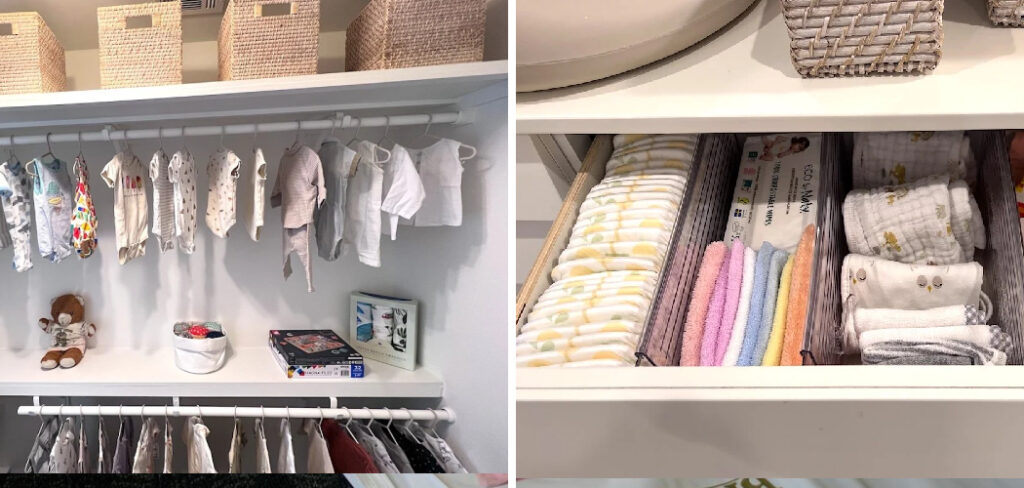
Closet dividers make hanging clothes easier to manage. Place dividers on the rod between each size group, then hang outfits from smallest to largest. This gives you a quick visual map of what fits now and what your baby will grow into next.
You can use store-bought dividers or make your own with cardstock and labels. Keep the writing large enough to read quickly. When a growth spurt happens, you can slide the next size forward without sorting the whole closet again.
This step works well for dresses, jackets, rompers, and special outfits. It also helps caregivers put clean clothes back in the right place.
Step 5 – Fold Small Items into Drawer Organizers
Tiny clothes disappear when they are stacked too deeply. Drawer organizers solve that problem by giving each category a clear home. Use one section for onesies, one for sleepers, one for pants, and one for socks or mittens.
Fold items so you can see the top edge of each piece. Soft cotton rows are easier to scan than tall piles that fall over. You will notice colors, patterns, and sizes faster when everything faces up.
If drawers are shallow, roll swaddles and burp cloths instead of folding them flat. The goal is not picture-perfect folding. The goal is fast access when your baby needs a change.
Step 6 – Store Diapers, Wipes, and Care Items Together
Keep diapering supplies in one dependable spot. Diapers, wipes, diaper cream, changing pad covers, and small towels should sit close together so you do not search during a messy change. A bin, basket, or shelf section can work well.
Open one package of diapers at a time and store extras behind it. This keeps the closet from feeling packed while still making backup supplies easy to find. If you use multiple diaper sizes, label each stack clearly.
Avoid mixing care products with clothing bins. Small tubes and bottles can leak, tip, or get buried under soft fabric. A separate care zone keeps the closet cleaner.
Step 7 – Set Up a Rotation Bin
Babies grow fast, so build a simple seasonal rotation system. Keep one bin for clothes that are too large and another for clothes your baby has outgrown. Label them clearly so you do not mix future outfits with items ready for storage or donation.
Check the next-size bin every few weeks. Touch the fabrics, look at the season, and pull forward anything your baby may soon wear. A cozy fleece sleeper may be perfect in winter but useless by summer.
This is where how to organize baby closet planning becomes easier over time. You stop reacting to clutter and start staying one step ahead.
Step 8 – Label Everything and Maintain Weekly
Labels help your system survive real life. Add clear labels to bins for sleepers, swaddles, diapers, blankets, keepsakes, outgrown clothes, and next sizes. If grandparents, babysitters, or partners help with laundry, labels remove the guesswork.
Choose one short weekly reset time. After laundry, check drawers, refill diapers, empty the hamper, and move anything too small into the outgrown bin. This can take less than ten minutes once the system is in place.
Pay attention to what you use most. If you always reach for one shelf, put daily items there. A baby closet should serve your routine, not fight it.
Common Mistakes When Organizing a Baby Closet
One common mistake is keeping every baby gift in the main closet, even when it will not fit for months. Larger clothing sizes, extra blankets, and keepsakes can crowd out daily essentials. Store future items in labeled bins so the current size stays easy to manage.
Another mistake is organizing by clothing type only, without thinking about size. A drawer full of mixed onesies looks neat until you pull out three that no longer fit. Size matters more than category during the first year because babies change so quickly.
Many first-time parents also forget to create an outgrown-clothes spot. Without one, tiny sleepers and snug bodysuits drift back into clean laundry piles. A single labeled bin solves this problem.
Finally, avoid overbuying storage products before you understand your routine. A closet full of matching baskets may look pretty, but it may not match how you actually change, wash, and dress your baby. Start simple, then add organizers where clutter keeps returning.
Expert Tips
Think in zones, not perfection. The best baby closet system is one you can maintain when you are tired. Keep everyday clothes, diapering supplies, laundry, future sizes, and keepsakes in separate areas so each item has a clear purpose.
Use open bins for items you grab often, such as swaddles, burp cloths, and diapers. Use closed bins for long-term storage, like seasonal outfits or sentimental pieces. Place the most-used items between your shoulders and hips so you can reach them without bending or stretching.
Review the closet after each growth spurt. Babies change quickly, and your storage should change with them. A five-minute reset can prevent weeks of clutter.
Frequently Asked Questions
How often should I reorganize a baby closet?
Plan a quick closet check every one to two weeks during the first year. Babies grow quickly, so clothes that fit last month may suddenly feel tight. You do not need a full reorganization each time. Just remove outgrown items, pull forward the next size, restock diapers, and tidy the most-used bins or drawers.
Should I hang or fold baby clothes?
Use both methods if you have the space. Hang jackets, dresses, rompers, matching outfits, and special pieces you want to see clearly. Fold everyday onesies, sleepers, pants, socks, and burp cloths in drawer organizers. Folding saves space, while hanging helps you track outfits by size and season.
What should go on the top shelf of a baby closet?
Use the top shelf for items you do not need every day. This may include larger baby clothes sizes, extra blankets, keepsake boxes, seasonal clothing, backup diapers, or unopened gifts. Keep these items in labeled bins so they stay dust-free and easy to identify when your baby grows into them.
How do I store clothes my baby has outgrown?
Place outgrown clothes in a labeled bin as soon as they no longer fit. Before storing them, wash and dry each item so stains do not set over time. Sort them by size if you plan to save them for another child. If not, create separate donation, resale, and keepsake piles.
How can I organize a small baby closet?
Use vertical space as much as possible. Add shelf bins, slim hangers, closet dividers, and drawer organizers to create clear sections without adding bulk. Keep only current-size clothing in the easiest spots. Store future sizes, extra diapers, and seasonal items higher up, under the crib, or in another closet if needed.
Conclusion
A baby closet works best when it supports your daily routine. Start by clearing the space, sorting clothes by size, and creating zones for everyday outfits, diaper supplies, future sizes, laundry, and keepsakes. Add closet dividers, drawer organizers, bins, and labels only where they make your life easier.
The key is to keep current items visible and future items contained. Babies move through growth spurts, seasons, and clothing sizes quickly, so your system should be simple enough to adjust without stress. A weekly reset can keep the closet useful long after the first big organization day.
If you are learning how to organize baby closet space for the first time, begin with one small step today. Empty one drawer, label one bin, or sort one size group. Small changes can make the whole nursery feel calmer and easier to use.

About
Joann Meril didn’t plan on becoming a parenting writer — it found her. After spending several years working as a certified nursing assistant in a pediatric clinic, Joann saw firsthand how anxious and under-informed new parents could feel, even with a hospital full of resources around them. When she had her own two children, that gap became personal. Suddenly she was the one googling things at 2 a.m., comparing baby monitors, and wondering if the swaddle she bought was actually safe.
That experience is what shaped her approach to writing. Joann believes parenting advice should be practical, honest, and free of unnecessary jargon or guilt. She tests products herself whenever possible, reads the actual safety standards instead of just the marketing copy, and isn’t afraid to say when something isn’t worth the money.
Today, Joann writes full-time, covering everything from newborn sleep routines to gear reviews to the small everyday wins that make parenting feel a little less overwhelming. When she’s not researching or writing, she’s usually chasing her own kids around the backyard or drinking coffee that’s gone cold for the third time that morning.
Joann lives in [City/State] with her husband and two children.
Credibility
- Background in pediatric caregiving (CNA)
- Mom of two, hands-on parenting experience
- Hand-tests baby gear before recommending it
- Focus: infant sleep, feeding, gear safety, early development