
You set your little one down for just a second, and the wailing begins. You step out of the room, and tiny arms reach for you like you’re leaving for good. If your baby suddenly clings to you, cries when you leave, or refuses to settle with anyone else, you’re not doing anything wrong. You’re meeting a very normal stage called separation anxiety.
This guide walks you through how to help baby with separation anxiety in gentle, doable steps. We’ll cover why it happens, what to try at each age, the mistakes that are easy to make, and the signs that tell you things are going well. Take a breath. You’ve got this.
Why This Matters for New Parents
Separation anxiety is your baby’s way of saying, “I love you and I notice when you’re gone.” Around 6 to 9 months, babies start to understand that you still exist even when they can’t see you. That’s a big developmental leap, but it comes with a side effect: the worry that you might not come back.
This stage matters because how you respond shapes your baby’s sense of security. When you answer their distress with warmth and consistency, you teach them that the world is safe and that you’re reliable. That trust becomes the foundation for confidence later on.
Here’s the reassuring part: separation anxiety is a sign of healthy attachment, not a problem to fix. Your baby isn’t spoiled, manipulative, or behind. They’re simply growing. Your job isn’t to make the feelings disappear — it’s to help your little one move through them feeling supported.
It also matters for you. The crying can be exhausting, and the guilt of leaving (even for a shower) can feel heavy. Learning a few simple strategies can ease the stress for both of you.
7 Step-by-Step Guide on How to Help Baby With Separation Anxiety
There’s no single trick that works overnight, but a steady, repeatable approach makes a real difference. Here’s a practical sequence you can start using today.
1. Practice short, low-stakes goodbyes
Start small. Step into the next room for a minute, then come back. These mini-separations show your baby that you always return.
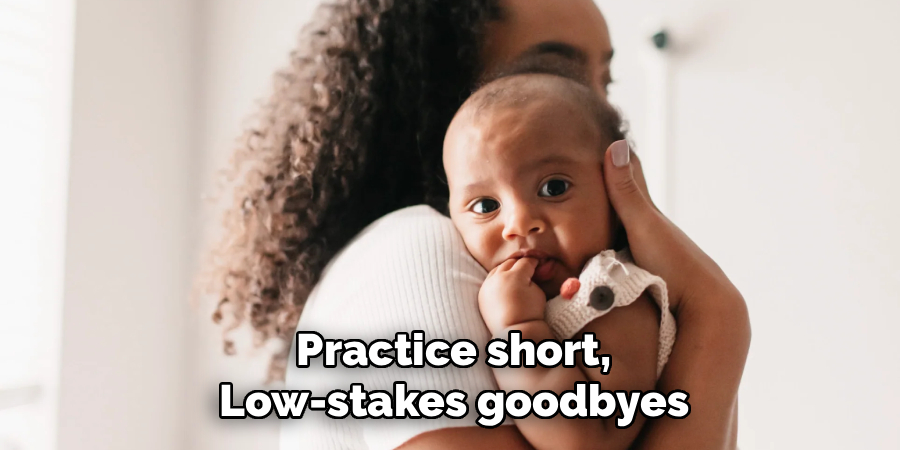
Tip: Narrate it from another room — “I’m right here!” — so your voice fills the gap before you reappear.
2. Create a goodbye ritual
A simple, predictable goodbye helps your baby know what’s coming. A wave, a kiss, and a cheerful phrase like “See you soon!” can work wonders.
Tip: Keep it the same every time. Predictability is calming, and your baby learns the pattern fast.
3. Leave calmly and confidently
Babies read your emotions like a weather report. If you look anxious or linger nervously, they sense that something’s wrong.
Tip: Smile, say your goodbye, and go. Drawing it out usually makes the crying worse, not better.
4. Introduce a comfort object
A soft blanket or a favorite stuffed animal can become a little anchor of security. It carries your comfort even when you step away.
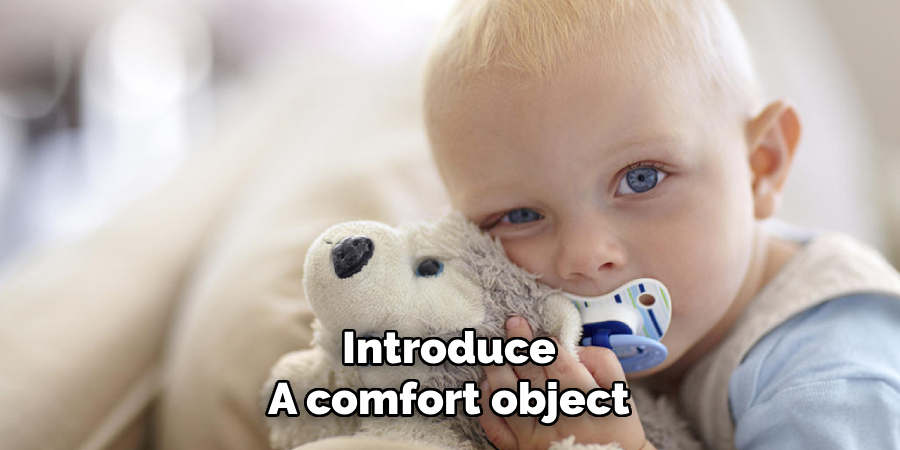
Tip: For babies under 12 months, keep soft items out of the crib during sleep and offer them only during awake, supervised time.
5. Build trust with a familiar caregiver
If someone else will be watching your baby, let them spend time together while you’re still present. Your baby borrows your calm and decides this new person is safe.
Tip: Hand over the comfort object and stick to your baby’s usual routine to smooth the transition.
6. Play peekaboo (yes, really)
Peekaboo is more than a game. It quietly teaches that things — and people — come back after they disappear.
Tip: Hide-and-find games with toys reinforce the same lesson in a fun, low-pressure way.
7. Keep routines steady
Consistent nap times, feeding times, and bedtime give your baby a sense of order. When the day feels predictable, the world feels safer.
Age-Specific Advice
Separation anxiety doesn’t look the same at every stage. Here’s what to expect and how to respond as your baby grows.
Newborn (0–6 weeks)
True separation anxiety hasn’t started yet. At this age, your newborn doesn’t yet understand that you exist separately from them.
What they do need is closeness, warmth, and quick responses to crying. Holding, feeding, and soothing on demand builds the early trust that makes later separations easier. You can’t spoil a newborn with too much love.
1–3 Months
Your baby is starting to recognize your face, voice, and smell. They may calm faster when you’re near, but they still don’t fear separation in the way older babies do.
This is a great time to build gentle routines and let your baby get comfortable around a few trusted caregivers. Familiarity now pays off later.
3–6 Months
Your little one is becoming more socially aware and may show early preferences for you. You might notice slightly more fussing when you leave the room.
Begin those short, playful separations and start a simple goodbye ritual. Peekaboo becomes especially useful here as your baby’s understanding grows.
6+ Months
This is when separation anxiety typically peaks, and it can come on strong between 8 and 18 months. Your baby now understands that you can leave — and they’d very much prefer you didn’t.
Lean fully into your toolkit: comfort objects, predictable goodbyes, and confident exits. Expect ups and downs, especially during big changes like teething, travel, or starting daycare. This phase is intense, but it does pass.
Common Mistakes to Avoid
Even loving, attentive parents fall into a few common traps. Here’s what to watch for and what to do instead.
Sneaking away without saying goodbye: It feels easier in the moment, but it can backfire. When your baby realizes you vanished without warning, they may cling harder next time, unsure when you might disappear again. Always say a quick, cheerful goodbye instead.
Drawing out the goodbye: Long, emotional farewells signal that leaving is a big, scary deal. Your baby picks up on the worry and amps up their own. Keep goodbyes short and warm, then go.
Showing your own anxiety: Babies mirror your mood. A tense face or a shaky voice tells them there’s something to fear. Practice a calm, confident tone — even if you’re feeling wobbly inside.
Skipping routines during the hard phase: When the crying is rough, it’s tempting to change everything to make it stop. But inconsistency usually adds to the worry. Predictable routines are one of your strongest tools, so try to keep them steady.
Expecting it to vanish overnight: Separation anxiety is a stage, not a switch. Pushing for instant results often leads to frustration for both of you. Progress comes in small, repeated steps.
Signs You’re Doing It Right
It’s easy to second-guess yourself during this phase. These small signs tell you your efforts are working, even when the crying hasn’t fully stopped.
- Your baby settles faster after you return. Recovery time shrinks as trust grows.
- They explore a little more confidently. Your baby glances back at you, then returns to play. That’s secure attachment in action.
- Goodbyes get a touch easier over time. Maybe not every day, but the overall trend points in the right direction.
- They accept comfort from a familiar caregiver. A short cry that eases with cuddles is a good sign.
- Your baby reaches for their comfort object. Self-soothing skills are developing, and that’s a milestone worth celebrating.
Progress rarely moves in a straight line. A rough day after a good week is completely normal and doesn’t undo your hard work.
Frequently Asked Questions
At what age does separation anxiety start and stop?
Separation anxiety usually begins around 6 to 9 months and often peaks between 8 and 18 months. For most babies, it eases significantly by age 2 to 3 as they better understand that you always come back. Every child has their own timeline, so some variation is completely normal.
Is separation anxiety a sign that something is wrong?
No. It’s a normal and healthy part of development. It actually shows that your baby has formed a strong, secure attachment to you. Far from being a red flag, it’s a sign your bond is doing exactly what it should.
Should I stop leaving my baby to avoid the crying?
It’s better to keep practicing short, calm separations. Avoiding them entirely can make the anxiety harder to outgrow, because your baby never gets the chance to learn that you return. Gentle, repeated practice builds confidence over time.
Will using a comfort object create a bad habit?
A comfort object is a healthy self-soothing tool, not a habit to worry about. Many children naturally let go of it as they grow. Just keep soft items out of the crib for babies under 12 months and offer them during supervised awake time instead.
Why does my baby have separation anxiety with me but not others?
Because you’re their safe base. Babies often save their biggest feelings for the person they trust most, which is usually a primary caregiver. It can feel overwhelming, but it’s a quiet compliment to the bond you’ve built.
Conclusion
Learning how to help baby with separation anxiety comes down to a few steady habits: warm goodbyes, calm exits, predictable routines, and plenty of patience. You won’t make the tears disappear instantly, and you don’t need to. Your steady presence is teaching your baby something powerful — that you always come back, and that they’re safe with you.
This phase can feel long and tiring, especially on the hard days. But it’s temporary, and it’s a sign of just how loved your little one feels. Trust yourself, keep showing up, and give yourself the same gentleness you give your baby. You’re doing a wonderful job, and you’re exactly the parent your baby needs.

About
Joann Meril didn’t plan on becoming a parenting writer — it found her. After spending several years working as a certified nursing assistant in a pediatric clinic, Joann saw firsthand how anxious and under-informed new parents could feel, even with a hospital full of resources around them. When she had her own two children, that gap became personal. Suddenly she was the one googling things at 2 a.m., comparing baby monitors, and wondering if the swaddle she bought was actually safe.
That experience is what shaped her approach to writing. Joann believes parenting advice should be practical, honest, and free of unnecessary jargon or guilt. She tests products herself whenever possible, reads the actual safety standards instead of just the marketing copy, and isn’t afraid to say when something isn’t worth the money.
Today, Joann writes full-time, covering everything from newborn sleep routines to gear reviews to the small everyday wins that make parenting feel a little less overwhelming. When she’s not researching or writing, she’s usually chasing her own kids around the backyard or drinking coffee that’s gone cold for the third time that morning.
Joann lives in [City/State] with her husband and two children.
Credibility
- Background in pediatric caregiving (CNA)
- Mom of two, hands-on parenting experience
- Hand-tests baby gear before recommending it
- Focus: infant sleep, feeding, gear safety, early development