

Your baby has white patches in their mouth, the doctor said “thrush,” and now you’re holding a tiny bottle of medicine wondering how on earth you’re supposed to get it in there. Take a breath. You’ve got this, and it’s far easier than it looks once you know the steps.
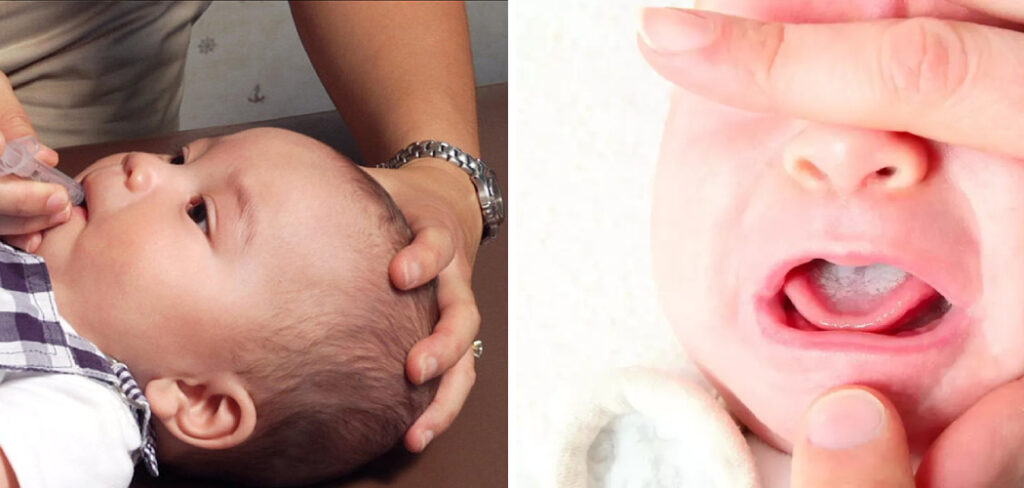
This guide walks you through how to apply nystatin drops for babies from start to finish. We’ll cover what you’ll need, exactly how to give the drops, age-specific tips, common slip-ups to skip, and the signs that tell you things are working.
What Nystatin Drops Actually Do
Nystatin is an antifungal medicine — it clears up a yeast infection called oral thrush. Thrush shows up as creamy white patches on your baby’s tongue, gums, or inner cheeks, and it’s very common in newborns.
The drops work right where the problem is. You place the liquid directly onto the patches in your baby’s mouth, and it goes to work on the surface. It isn’t swallowed to fight something deeper in the body, so coating the mouth well is what matters most.
Why This Matters for New Parents
Thrush can make feeding uncomfortable for your baby, and an uncomfortable baby means a stressed-out you. Treating it properly helps your little one eat happily again and stops the infection from lingering.
Here’s the reassuring part: thrush is rarely serious, and nystatin is a gentle, widely used medicine. Your job is simply to give the drops correctly and finish the full course. Do that, and most cases clear up without drama.
Many parents worry they’ll “do it wrong” or upset the baby. That’s normal. A little wiggling or fussing during dosing is completely fine and won’t ruin the treatment.
What You’ll Need
Gather everything before you start so you’re not scrambling mid-dose. A calm setup makes the whole thing smoother.
- The nystatin bottle: Shake it well unless the label says otherwise.
- The dropper or oral syringe: Usually included; if not, your pharmacist can give you one.
- A clean cloth or burp cloth: For catching drips and wiping little chins.
- A clean finger or cotton swab: Helpful for spreading the medicine onto patches.
- A comfortable spot: A chair where you can hold your baby securely.
Tip: Wash your hands before and after. Clean hands keep extra germs out of your baby’s mouth.
8 Step-by-Step Guide: How to Apply Nystatin Drops for Babies
Follow these steps each time. After a dose or two, it’ll feel like second nature.
- Wash your hands and read the dose. Check the exact amount your doctor prescribed. Drawing up the right amount every time keeps the treatment effective.
- Shake the bottle and fill the dropper. Measure carefully using the dropper or syringe. Eyeballing it leads to too much or too little.
- Get your baby comfortable. Hold them in a slightly upright position, like a relaxed feeding hold. Upright is safer than flat on their back for putting liquid in the mouth.
- Open the mouth gently. Press lightly on the chin or offer a clean finger to ease the lips apart. There’s no need to force anything.
- Place the drops on the affected areas. Aim for the white patches — tongue, inner cheeks, gums. Apply a little to each side rather than dumping it all in one spot. Tip: A clean finger or cotton swab helps you dab medicine directly onto stubborn patches.
- Let it coat the mouth. Try to keep the medicine in contact with the patches for as long as you can. The longer it stays put, the better it works.
- Wait before feeding. Hold off on milk or food for about 20–30 minutes if you can. Feeding right away washes the medicine straight out.
- Clean up and store the bottle. Wipe your baby’s chin, rinse the dropper, and cap the bottle. Store it as the label directs.
Tip: Doing the dose after a feed (rather than before) often means your baby is calmer and more willing to cooperate.
Age-Specific Advice
The same medicine works at every age, but your approach shifts as your baby grows.
Newborns (0–4 weeks)
Newborns are tiny and squirmy, so swaddling can help. Wrap them snugly, then dose with one hand supporting the head. Use small amounts on each side of the mouth so nothing pools at the back.
1–3 Months
At this stage babies are stronger and may turn their heads. Try dosing during a quiet, alert moment. A gentle cheek stroke can encourage them to open up.
3–6 Months
Curiosity kicks in. Your baby may grab at the dropper, so an extra pair of hands helps if someone’s around. Keep your tone soft and your movements slow to avoid startling them.
6+ Months
Older babies might clamp down or protest more. Offering a favorite toy as a distraction works wonders. If they’ve started solids, you can still give nystatin between meals — just keep that 20–30 minute window before food.
Common Mistakes to Avoid
Small habits can quietly undo good treatment. Here are the ones to watch for.
- Feeding too soon after dosing. Milk rinses the medicine away before it can work. Wait the recommended 20–30 minutes.
- Stopping early because patches faded. Thrush often looks better before it’s fully gone. Finish the entire course your doctor prescribed, even if your baby seems fine.
- Putting all the medicine in one spot. The drops need to reach every patch. Spread them across both cheeks, the tongue, and gums.
- Skipping the bottle shake or guessing the dose. Inconsistent amounts mean inconsistent results. Measure every single time.
- Ignoring possible sources of reinfection. If you’re breastfeeding, thrush can pass between you and baby. Ask your doctor whether your nipples or pump parts need treating too.
Safety Tips
Nystatin is gentle, but a few simple habits keep things safe and clean.
- Use only the prescribed amount. More medicine doesn’t clear thrush faster.
- Never share the bottle or dropper between children.
- Store it as directed — some need refrigeration, some don’t. Check the label.
- Sterilize feeding items. Boil or sterilize bottles, pacifiers, and pump parts regularly to stop the yeast returning.
- Check the expiration date before each use and toss anything expired.
Tip: Keep dosing times consistent — for example, after morning and evening feeds — so you don’t accidentally skip or double up.
Signs You’re Doing It Right
It helps to know what progress looks like, so you’re not second-guessing yourself.
- The white patches shrink over several days.
- Feeding gets easier and your baby seems more comfortable.
- Less fussiness during or after eating.
- Your baby tolerates the drops a little better each time as you both settle into a routine.
Improvement is usually gradual, not overnight. Seeing small changes day by day means the treatment is doing its job.
When to Call a Doctor
Most thrush clears up smoothly, but reach out to your pediatrician if you notice any of these:
- No improvement after several days of treatment, or patches getting worse.
- Your baby refuses to feed or shows signs of pain while eating.
- Fewer wet diapers or signs of dehydration.
- A fever or your baby seeming generally unwell.
- Thrush keeps coming back after finishing the course.
- Any reaction like a rash, swelling, or unusual irritability after dosing.
Trust your instincts. If something feels off, a quick call to your doctor is always worth it.
Frequently Asked Questions
How long does nystatin take to work on baby thrush?
You’ll often see improvement within a few days. Even so, finish the full course — usually around 7 to 14 days, or whatever your doctor advised — because patches can fade before the infection is fully gone.
Can I feed my baby right after giving nystatin drops?
It’s best to wait about 20–30 minutes. Feeding immediately washes the medicine out of the mouth before it can work on the patches.
What if my baby spits out the nystatin?
A little drooling or spitting is normal and usually fine. Try applying smaller amounts to each side of the mouth, and dab it directly onto patches with a clean finger so more stays in place.
Do I need to treat myself if I’m breastfeeding?
Possibly. Thrush can pass back and forth between you and your baby. Ask your doctor whether you need a cream or treatment for your nipples to stop reinfection.
How do I store nystatin drops?
Check the label, since storage varies by brand. Some need refrigeration and some are kept at room temperature. Always keep the bottle tightly capped and away from your baby’s reach.
You’ve Got This
Learning how to apply nystatin drops for babies feels intimidating the first time, but it quickly becomes a simple part of your day. Measure carefully, coat those patches well, wait before feeding, and finish the full course — that’s really the heart of it.
Thrush is common, treatable, and rarely anything to panic about. With a little patience and the steps above, your baby will be back to comfortable, happy feeds before you know it. You’re doing a wonderful job, and that calm, attentive care is exactly what your little one needs.

About
Joann Meril didn’t plan on becoming a parenting writer — it found her. After spending several years working as a certified nursing assistant in a pediatric clinic, Joann saw firsthand how anxious and under-informed new parents could feel, even with a hospital full of resources around them. When she had her own two children, that gap became personal. Suddenly she was the one googling things at 2 a.m., comparing baby monitors, and wondering if the swaddle she bought was actually safe.
That experience is what shaped her approach to writing. Joann believes parenting advice should be practical, honest, and free of unnecessary jargon or guilt. She tests products herself whenever possible, reads the actual safety standards instead of just the marketing copy, and isn’t afraid to say when something isn’t worth the money.
Today, Joann writes full-time, covering everything from newborn sleep routines to gear reviews to the small everyday wins that make parenting feel a little less overwhelming. When she’s not researching or writing, she’s usually chasing her own kids around the backyard or drinking coffee that’s gone cold for the third time that morning.
Joann lives in [City/State] with her husband and two children.
Credibility
- Background in pediatric caregiving (CNA)
- Mom of two, hands-on parenting experience
- Hand-tests baby gear before recommending it
- Focus: infant sleep, feeding, gear safety, early development