
That tiny hic sound from your baby can stop you in your tracks. One minute they’re feeding peacefully, the next they’re hiccuping away, and you’re wondering if something is wrong. Take a deep breath — your baby is almost certainly just fine.
Baby hiccups are incredibly common, especially in the early months. Still, knowing how to get rid of baby hiccups fast can make both of you more comfortable. In this guide, you’ll learn why hiccups happen, simple ways to ease them, age-specific tips, mistakes to skip, and the rare signs that mean it’s time to call your doctor.
Why This Matters for New Parents
Hiccups look dramatic, but they rarely bother your baby the way they bother you. Most babies hiccup happily and don’t seem fazed at all. The worry usually sits with the parent, not the child.
Here’s the reassuring truth: hiccups in babies are a normal part of early development. Your little one likely hiccuped in the womb, too. The diaphragm — the muscle under the lungs that helps you breathe — is still maturing, so it twitches easily.
Knowing this helps you stay calm. And a calm parent makes for a calmer feeding and burping routine, which often shortens the hiccups on its own. You’re not failing at anything when your baby hiccups. You’re simply parenting a brand-new human whose body is still learning.
What You’ll Need
You don’t need much to soothe baby hiccups. Most of what helps is gentle technique, not gadgets. Still, a few items make the process smoother.
- A burp cloth or muslin: Protects your shoulder and catches any spit-up.
- A pacifier: The sucking motion can relax the diaphragm.
- A comfortable feeding spot: An upright chair or supportive cushion helps with positioning.
- Gripe water (optional): Some parents use it, though evidence is limited. Check with your pediatrician first.
- Patience: Honestly, this is the most useful tool you have.
That’s it. No special equipment, no pressure to fix things instantly.
5 Step-by-Step Guide to Get Rid of Baby Hiccups Fast
These gentle methods work for most babies. Try them one at a time and stop when the hiccups settle. Never feel rushed — hiccups usually fade within 10 to 15 minutes anyway.
Step 1: Pause and Burp
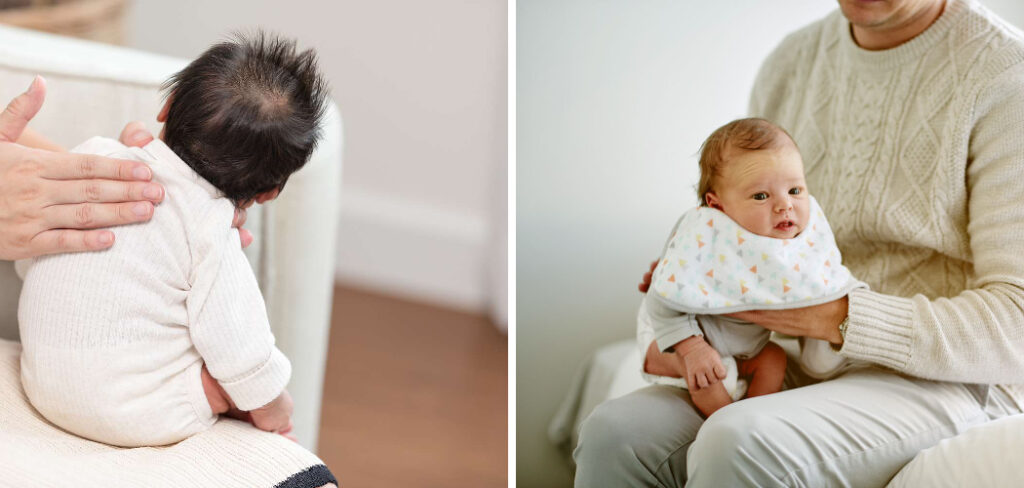
Stop the feeding and burp your baby. Trapped air often triggers hiccups, and releasing it can stop them.
Tip: Hold your baby upright against your chest and pat their back gently. A soft circular rub works just as well as patting.
Step 2: Adjust the Feeding Position
Keep your baby more upright while feeding. A flatter position lets milk and air mix, which can spark hiccups.
Tip: If you bottle-feed, tilt the bottle so the nipple stays full of milk. This reduces the air your baby swallows.
Step 3: Offer a Pacifier
Let your baby suck on a pacifier. The rhythmic sucking relaxes the diaphragm and often calms the spasms.
Tip: This works best when your baby seems content rather than hungry or upset.
Step 4: Try Gentle Tummy Time or Rubbing
Lay your baby across your lap or hold them upright and rub their back. Light pressure and movement can ease the muscle twitch.
Tip: Always supervise tummy time and keep it brief if your baby just ate.
Step 5: Let Them Resolve Naturally
If nothing seems to work, that’s okay. Hiccups almost always stop on their own without any help at all.
Tip: Resist the urge to keep “trying” things. Sometimes doing less is the kindest approach.
Age-Specific Advice
Hiccups change a little as your baby grows. Here’s what to expect and what helps at each stage.
Newborns (0–4 Weeks)
Newborns hiccup the most, and it can feel constant. Their digestive systems and diaphragm are brand new. Focus on slow, calm feeds and frequent burping. There’s rarely anything to fix here.
1–3 Months
Hiccups are still common but may start to lessen. Watch for overfeeding, which is a frequent trigger now. Smaller, more frequent feeds often help.
3–6 Months
By this age, many babies hiccup less often. If yours still does, keep them upright after feeds for 15 to 20 minutes. Their stronger muscles handle feeding more efficiently.
6+ Months
Once solids enter the picture, eating too quickly can bring hiccups back. Offer water with meals and slow the pace. Hiccups at this stage are usually short and harmless.
Common Mistakes to Avoid
A few well-meaning habits can make hiccups worse or simply stress you out. Here’s what to skip.
- Trying adult hiccup tricks: Never startle your baby, hold their nose, or have them “hold their breath.” These methods are unsafe for infants.
- Feeding too fast or too much: Overfeeding stretches the stomach and triggers hiccups. Slow down and watch for fullness cues.
- Laying baby flat right after feeding: This invites both hiccups and spit-up. Keep them upright for a bit.
- Giving water to young babies: Babies under six months don’t need water, and it can be harmful. Stick to milk unless your doctor says otherwise.
- Panicking: Easier said than done, but anxiety doesn’t help your baby relax. Hiccups are rarely a sign of trouble.
Safety Tips
Soothing hiccups should always feel gentle and safe. Keep these reminders in mind.
- Support the head and neck whenever you hold or burp your baby upright.
- Avoid sugar water or home remedies unless your pediatrician approves them.
- Skip honey entirely before age one — it carries a risk of infant botulism, a rare but serious illness.
- Watch pacifier hygiene by keeping it clean and replacing it when worn.
- Never force a feeding to stop hiccups. A relaxed baby settles faster than a pressured one.
These steps protect your baby while you wait for the hiccups to pass.
Signs You’re Doing It Right
It helps to know what success actually looks like. You don’t need to eliminate every hiccup — you just need a comfortable baby.
- Your baby stays calm and content during hiccups.
- Hiccups fade within 10 to 15 minutes most of the time.
- Feeding feels slower and more relaxed than before.
- You’re burping partway through feeds and afterward.
- You feel a little more confident each time it happens.
If you see these signs, you’re handling things beautifully. Hiccups that come and go without distress mean everything is working as it should.
When to Call a Doctor
Hiccups are almost always harmless. Still, a few situations deserve a quick check-in with your pediatrician. Trust your instincts — you know your baby best.
Call your doctor if:
- Hiccups happen constantly and seem to interfere with feeding or sleep.
- Your baby seems uncomfortable or distressed during nearly every episode.
- Hiccups come with frequent spitting up, arching, or coughing during feeds. This can sometimes point to reflux, where stomach contents move back up the food pipe.
- Your baby has trouble breathing or changes color during hiccups.
- Hiccups persist beyond infancy or suddenly increase without an obvious cause.
These signs are uncommon. But reaching out brings peace of mind, and that’s always worth a phone call.
Frequently Asked Questions
How long do baby hiccups usually last?
Most last between a few minutes and 15 minutes. Some babies hiccup several times a day, which is completely normal. If they bother you more than they bother your baby, that’s a good sign things are fine.
Can I stop hiccups while my baby is sleeping?
It’s best to leave a sleeping baby alone. Hiccups rarely disturb sleep, and most babies snooze right through them. Waking them usually causes more disruption than the hiccups do.
Does gripe water actually work?
Some parents find it helpful, but the evidence is limited. Gripe water is generally considered safe in small amounts, yet results vary from baby to baby. Always check with your pediatrician before trying it.
Are frequent hiccups a sign of overfeeding?
They can be. A full or stretched stomach often triggers hiccups. Try smaller, slower feeds and more frequent burping to see if it helps.
Should I worry if my baby hiccups every day?
Usually not. Daily hiccups are extremely common in the first few months. Worry only if they come with distress, breathing trouble, or feeding problems — otherwise, they’re just part of growing up.
Final Thoughts: You’ve Got This
Learning how to get rid of baby hiccups fast really comes down to a few gentle habits: slow feeds, regular burping, upright cuddles, and a calm, patient approach. None of it requires special skill — just a little practice and a lot of love.
Remember, hiccups are a normal, healthy part of your baby’s early months. They’ll fade on their own as your little one grows. So the next time you hear that tiny hic, take a breath, hold your baby close, and trust that you’re doing a wonderful job.

About
Joann Meril didn’t plan on becoming a parenting writer — it found her. After spending several years working as a certified nursing assistant in a pediatric clinic, Joann saw firsthand how anxious and under-informed new parents could feel, even with a hospital full of resources around them. When she had her own two children, that gap became personal. Suddenly she was the one googling things at 2 a.m., comparing baby monitors, and wondering if the swaddle she bought was actually safe.
That experience is what shaped her approach to writing. Joann believes parenting advice should be practical, honest, and free of unnecessary jargon or guilt. She tests products herself whenever possible, reads the actual safety standards instead of just the marketing copy, and isn’t afraid to say when something isn’t worth the money.
Today, Joann writes full-time, covering everything from newborn sleep routines to gear reviews to the small everyday wins that make parenting feel a little less overwhelming. When she’s not researching or writing, she’s usually chasing her own kids around the backyard or drinking coffee that’s gone cold for the third time that morning.
Joann lives in [City/State] with her husband and two children.
Credibility
- Background in pediatric caregiving (CNA)
- Mom of two, hands-on parenting experience
- Hand-tests baby gear before recommending it
- Focus: infant sleep, feeding, gear safety, early development