
One minute your little one is happily playing on the floor. The next, you notice a coin that was sitting right there is suddenly gone. Your heart drops, and a single question takes over your mind: did my baby just swallow that?
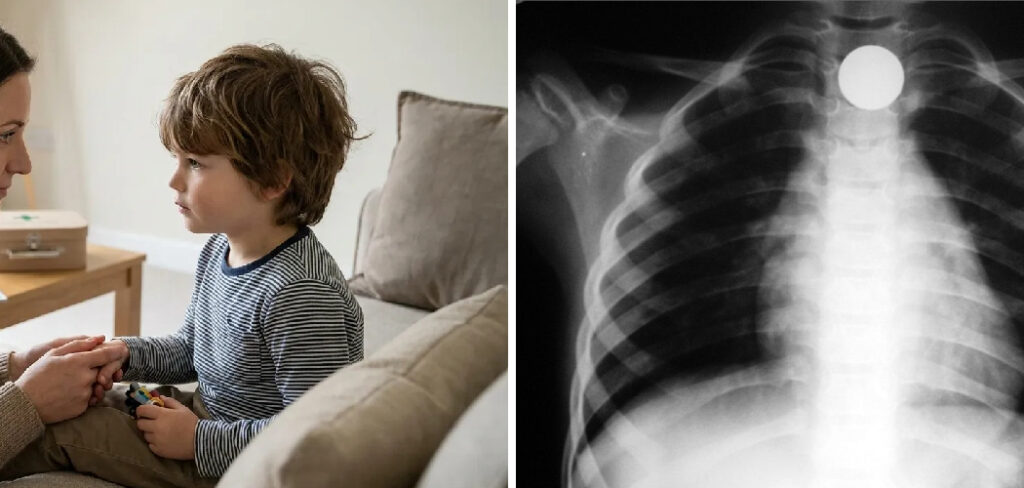
Take a breath. You are not the first parent to face this, and you will handle it. This guide walks you through how to know if your baby swallowed a coin, what to do right away, the mistakes to skip, and exactly when to get medical help.
Why This Matters for New Parents
Babies explore the world with their mouths. That curiosity is healthy and normal, but it also means small objects like coins can disappear fast.
Coins are one of the most common things young children swallow. They are shiny, easy to grab, and the perfect size to fit in a tiny mouth. So if you are worried, know that your concern is reasonable, not overprotective.
Here is the reassuring part: many swallowed coins pass through a child’s system on their own without causing harm. Still, some situations need quick attention. Knowing the difference helps you stay calm and act wisely.
There is one detail worth understanding now. Button batteries are not coins. They look similar, but a button battery can cause serious injury within hours and is always an emergency. We will come back to this, because telling the two apart matters a lot.
Step-by-Step Guide: What to Do If You Suspect Your Baby Swallowed a Coin
If you think your baby swallowed a coin, follow these steps in order. They are designed to keep you focused when your nerves are running high.
- Stay calm and watch your baby closely. Look at how they are breathing and acting. A child who is crying, breathing normally, and pink in the face still has a clear airway. That is a good sign, even if it is scary.
- Check for choking. Choking is different from swallowing. If your baby cannot breathe, cough, or cry, is turning blue, or is grabbing at their throat, this is a true emergency. Call your local emergency number right away and begin choking first aid if you are trained.
- Confirm what is missing. Quickly figure out what your baby may have put in their mouth. Was it a coin, or could it have been a button battery or magnet? This single piece of information changes everything for the doctor who helps you next.
- Do not try to make your baby vomit. Forcing vomiting can cause more harm than good. We will explain why in the next section.
- Keep food and drink simple for now. Unless a medical professional tells you otherwise, avoid offering a big meal. Your doctor may want an empty stomach in case an X-ray or procedure is needed.
- Call your doctor or a poison helpline. Even if your baby seems fine, a quick call gives you clear, personalized guidance. Describe what was swallowed, your baby’s age, and any symptoms.
- Watch for symptoms over the next hours and days. If a doctor advises monitoring at home, keep an eye out for the warning signs listed further down. Most coins that reach the stomach pass naturally within a week or two.
A quick tip: Save any matching coins or objects to show the doctor. Seeing an identical item helps them judge the size and type far better than a description alone.
Common Mistakes to Avoid
When panic hits, it is easy to react in ways that make things harder. Here are the slip-ups parents most often make, and what to do instead.
- Trying to make your baby throw up. This rarely brings the coin back up and can cause it to get stuck in the airway. Let trained professionals decide on the next step.
- Reaching into the mouth blindly. A finger sweep can push the object deeper. Only remove something if you can clearly see it and grab it easily.
- Assuming every shiny disc is a coin. Button batteries and small magnets are far more dangerous than coins. Treat any uncertainty as a reason to seek care immediately.
- Waiting to see if symptoms appear before calling anyone. A short phone call costs you nothing and can save you hours of worry. You do not need to wait for a problem to ask for guidance.
- Forgetting to note the time. Jot down roughly when it happened. This timeline helps doctors decide how urgently to act.
Safety Tips to Prevent Coin Swallowing
The best emergency is the one that never happens. A few small habits go a long way toward keeping coins out of curious hands.
- Do a floor-level scan often. Get down to your baby’s eye level and look for anything small enough to swallow. You will spot things you would otherwise miss.
- Keep coins in closed containers. Jars, wallets, and purses should stay well out of reach, ideally up high and zipped or latched.
- Check pockets and couch cushions. Loose change loves to hide in sofas, car seats, and coat pockets. A quick sweep here prevents surprises.
- Watch shared spaces. Grandparents’ homes, restaurants, and friends’ houses may not be baby-proofed. Stay extra alert in places you do not control.
- Teach older siblings the rules. Kids love handing little ones “treasures.” A simple “no small things for the baby” rule helps the whole family stay on guard.
- Choose age-appropriate toys. Follow the age labels on packaging. They exist mainly to flag choking and swallowing risks.
One more reminder worth repeating: store button batteries and devices that hold them with real care. Remote controls, key fobs, and musical cards often contain these batteries, and they deserve the same caution as cleaning products.
When to Call a Doctor
Some signs mean you should stop monitoring at home and get help right away. When in doubt, it is always okay to call.
Seek immediate emergency care if your baby shows any of these:
- Trouble breathing, noisy breathing, or a bluish color around the lips or face
- Constant drooling or an inability to swallow their own spit
- Refusing to eat or drink, or crying with pain when trying to
- Vomiting, especially repeated vomiting or any blood
- Chest, throat, or belly pain that does not settle
- Coughing, wheezing, or gagging that continues
Call your doctor promptly, even without these symptoms, if:
- You are not sure whether it was a coin or a button battery or magnet. Both batteries and swallowed magnets are urgent and need same-day medical attention.
- The coin was large, such as a quarter-sized piece, in a baby or young toddler.
- It has been several days and you have not seen the coin pass in a diaper or stool, or your child still seems off.
A coin lodged in the throat or food pipe needs removal, usually with a quick procedure. A coin that has reached the stomach often passes on its own, but your doctor is the right person to confirm which situation you are dealing with.
Frequently Asked Questions
How can I tell if my baby swallowed a coin or just dropped it?
Look for clues. A missing coin plus symptoms like drooling, gagging, or refusing food points toward swallowing. If your baby is acting completely normal, it may have simply rolled away, but a quick search of the area and a call to your doctor will give you peace of mind.
Will the coin come out in my baby’s poop?
Often, yes. Once a coin reaches the stomach, it usually travels through and shows up in a diaper within a few days to two weeks. You can check stools if your doctor advises monitoring at home. If it does not appear or symptoms develop, call your doctor.
My baby seems totally fine. Do I still need to do anything?
A baby acting normally is reassuring, but a swallowed coin can sit in the food pipe without obvious symptoms. A short call to your doctor or a poison helpline is the safest move, even when your little one seems happy.
What is the difference between a coin and a button battery, and why does it matter?
A button battery is a small, round, metallic disc that powers items like watches, remotes, and singing greeting cards. Unlike a coin, it can burn the tissue inside the throat or food pipe within hours. If there is any chance your baby swallowed a battery instead of a coin, treat it as an emergency.
Should I give my baby food to help push the coin down?
Not on your own. While food sometimes helps things move along, your doctor may need your baby’s stomach empty in case a procedure is required. Wait for medical advice before offering meals.
A Final, Reassuring Word
Knowing how to know if your baby swallowed a coin comes down to a few simple things: stay calm, watch how your baby is breathing and acting, rule out a button battery, and call for guidance even when everything seems fine.
Moments like these are frightening, but they are also incredibly common, and most have happy endings. Trust your instincts, lean on your doctor, and give yourself credit for paying attention. You are doing a wonderful job caring for your little explorer.

About
Joann Meril didn’t plan on becoming a parenting writer — it found her. After spending several years working as a certified nursing assistant in a pediatric clinic, Joann saw firsthand how anxious and under-informed new parents could feel, even with a hospital full of resources around them. When she had her own two children, that gap became personal. Suddenly she was the one googling things at 2 a.m., comparing baby monitors, and wondering if the swaddle she bought was actually safe.
That experience is what shaped her approach to writing. Joann believes parenting advice should be practical, honest, and free of unnecessary jargon or guilt. She tests products herself whenever possible, reads the actual safety standards instead of just the marketing copy, and isn’t afraid to say when something isn’t worth the money.
Today, Joann writes full-time, covering everything from newborn sleep routines to gear reviews to the small everyday wins that make parenting feel a little less overwhelming. When she’s not researching or writing, she’s usually chasing her own kids around the backyard or drinking coffee that’s gone cold for the third time that morning.
Joann lives in [City/State] with her husband and two children.
Credibility
- Background in pediatric caregiving (CNA)
- Mom of two, hands-on parenting experience
- Hand-tests baby gear before recommending it
- Focus: infant sleep, feeding, gear safety, early development