
You hand your baby your phone for two seconds, and suddenly they’ve called your boss, opened the camera, and somehow ordered something off the App Store. If that sounds familiar, you’re not alone. Babies have a gift for tapping exactly the buttons you didn’t want them to touch.
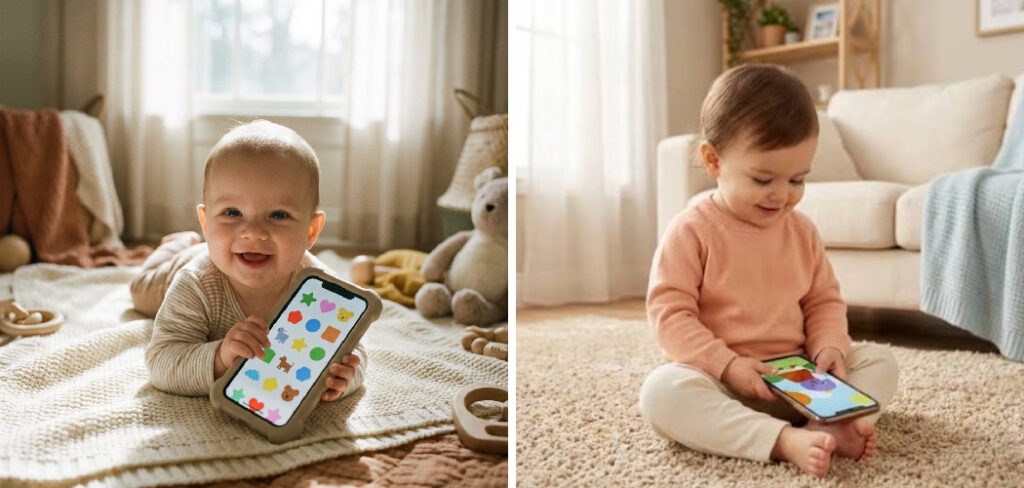
The good news is that your iPhone already has tools built in to handle this. Learning how to lock the screen on iPhone for baby keeps them happily focused on one app — like a lullaby video or a photo of grandma — while everything else stays locked away. This guide walks you through the simplest methods, the mistakes to avoid, and a few smart habits to make it all work smoothly. Let’s get your phone baby-proofed.
Why This Matters for New Parents
A locked screen protects more than your sanity. Babies don’t know the difference between a video and a “buy now” button, so even a few stray taps can cause real headaches.
Here’s what a proper screen lock helps prevent:
- Accidental calls and texts: No more mystery calls to your contacts or random messages full of emojis.
- App purchases: Little fingers can trigger in-app purchases or App Store downloads that cost real money.
- Deleted photos or apps: A few wrong taps can wipe out something you wanted to keep.
- Wandering screen time: Without a lock, your baby can swipe out of a calm video and into something overstimulating.
There’s also the privacy angle. Your phone holds messages, photos, banking apps, and more. Locking the screen to a single app means none of that is one tap away.
The point isn’t to keep your baby off the phone entirely — that’s a personal choice every family makes differently. The point is control. When you decide your baby can watch one thing, you want that to be the only thing they can reach.
What You’ll Need
You don’t need much to get started. Most of this is already sitting in your pocket.
- An iPhone running iOS 13 or later. The features below have been around for years, so almost any modern iPhone will have them. To check your version, open Settings > General > About and look for “Software Version.”
- A passcode you’ll remember. Guided Access uses its own passcode (or Face ID/Touch ID) to unlock. Pick something you won’t forget mid-meltdown.
- The app you want your baby to use. Have it ready before you start — a video app, a baby-safe game, or your photo library.
- A couple of minutes to set it up once. After the first setup, turning the lock on and off takes seconds.
That’s it. No downloads, no extra gadgets, no subscriptions.
Step-by-Step Guide on How to Lock the Screen on iPhone for Baby
Your iPhone offers two main tools for this. Guided Access locks the phone to one app and disables the rest. Auto-Lock controls how quickly the screen dims when no one’s touching it. Most parents want Guided Access, so we’ll start there.
Setting Up Guided Access (the Main Method)
Guided Access is the closest thing to a true “baby lock.” It freezes your phone on a single app until you enter your passcode.
- Turn the feature on. Go to Settings > Accessibility > Guided Access and toggle it on.
- Set a passcode. Tap Passcode Settings > Set Guided Access Passcode and choose a code. You can also turn on Face ID or Touch ID here to end sessions faster.
- Open the app you want. Launch the video, game, or photos app before locking.
- Start the session. Triple-click the side button (or the Home button on older models). A Guided Access screen will appear.
- Disable touch zones if you like. Circle any part of the screen you want to block — handy for hiding a “skip” or “buy” button. Tip: You can also turn off touch entirely so your baby just watches without tapping.
- Tap Start. Your phone is now locked to that one app.
To end the session, triple-click the side button again and enter your passcode or use Face ID. Simple as that.
Adjusting Auto-Lock (a Helpful Backup)
Auto-Lock decides how long your screen stays on before going dark. This matters for babies because a too-short timer means the video keeps cutting out, while a too-long timer drains your battery.
- Go to Settings > Display & Brightness > Auto-Lock.
- Choose a time that fits the moment. A longer setting (like 5 minutes) keeps a video playing without interruption.
- Switch it back to a shorter time later to save battery and protect your privacy when you’re done.
One note: Auto-Lock alone won’t stop your baby from tapping around. Pair it with Guided Access for real control.
Bonus: Screen Time Limits for Older Babies
If you want broader control across the day, the Screen Time tool (in Settings) lets you set daily limits and block certain apps. It’s more of a long-term setting than a quick lock, but it’s worth knowing about as your little one grows.
Common Mistakes to Avoid
A few small slip-ups can turn this handy feature into a frustrating one. Here’s what trips parents up most.
Forgetting your Guided Access passcode. This is the big one. If you forget the code, you may have to force-restart your phone to get out of the session. Choose something memorable, and consider enabling Face ID as a backup.
Not actually starting the session. Turning Guided Access on in Settings doesn’t lock anything by itself. You still have to triple-click and tap Start each time. Skipping that step leaves your phone wide open.
Leaving purchase buttons reachable. If you don’t block touch zones, a curious baby can still tap “buy” or “subscribe” inside an app. Circle those areas during setup, or turn off touch completely.
Setting Auto-Lock too short. A 30-second timer means the screen keeps dying mid-video, which frustrates everyone. Bump it up while your baby is watching, then lower it again afterward.
Relying on it as a babysitter. A locked screen is a tool, not a substitute for supervision. Stay nearby — both for safety and for those sweet moments you don’t want to miss.
Safety Tips
Locking the screen handles the device side of things. These habits cover the bigger picture of healthy, safe phone time.
- Keep screen time short and intentional. Pediatric groups generally suggest very limited screen time for babies under 18 months, ideally just video chatting with family. Use the lock for those moments, not for hours.
- Lower the brightness and turn on Night Shift. Bright screens can be harsh on developing eyes. Night Shift (in Settings > Display & Brightness) warms the colors and may feel easier to look at, especially in the evening.
- Choose calm, age-appropriate content. Slow, gentle videos beat fast, flashy ones. Preview anything before you hand it over.
- Keep volume moderate. Baby ears are sensitive, so keep the sound low and check it from their distance.
- Clean the screen often. Phones collect germs fast. Wipe yours down before and after baby uses it.
- Mind the cord and the drop. Keep charging cables out of reach, and use a sturdy case in case the phone takes a tumble.
None of this needs to feel strict. Think of it as setting up a small, safe bubble for the few minutes your baby spends with the screen.
Signs You’re Doing It Right
Wondering if it’s all working as it should? Here are the green lights.
- Your baby stays on one app. When you triple-click and start a session, swiping and pressing the side button does nothing — exactly as planned.
- No surprise calls or charges. Your call log stays clean and your App Store receipts stay quiet.
- Exiting takes your passcode. If you have to enter a code or use Face ID to get out, the lock is doing its job.
- The video plays without cutting off. That means your Auto-Lock timer is set well for screen time.
- You feel relaxed handing over the phone. That calm is the real sign. When you trust the lock, you stop hovering over every tap.
If all of these feel true, you’ve got it figured out.
Frequently Asked Questions
Does locking the screen for my baby work on every iPhone?
Yes, for the most part. Guided Access works on any iPhone running iOS 13 or later, which covers nearly all phones still in use. The steps look slightly different on older models with a Home button, where you triple-click that button instead of the side button.
What if I forget my Guided Access passcode?
You’ll need to restart your phone to break out of the session, which can interrupt whatever’s open. To avoid this, enable Face ID or Touch ID as a backup when you set up Guided Access — then a quick glance or fingerprint ends the session.
Can my baby still buy apps or make calls while the screen is locked?
Not if you set it up fully. Guided Access blocks the rest of the phone, and you can disable specific touch zones to cover any in-app buttons. For extra peace of mind, turn off touch entirely so your baby can only watch.
Is there a difference between Guided Access and Screen Time?
Yes. Guided Access locks the phone to one app right now, for a single session. Screen Time sets ongoing daily limits and rules across apps. Use Guided Access for the moment-to-moment lock and Screen Time for the bigger picture.
How do I quickly turn the lock on and off?
After the one-time setup, just open your chosen app and triple-click the side button to start. Triple-click again and enter your passcode (or use Face ID) to stop. The whole thing takes seconds once you’ve done it once.
Final Thoughts on How to Lock the Screen on iPhone for Baby
Figuring out how to lock the screen on iPhone for baby really comes down to one simple habit: open the app, triple-click, and tap Start. Once that’s part of your routine, you can hand over your phone without bracing for accidental calls, surprise purchases, or deleted photos.
Keep your eye on the things that matter most — short, calm screen time and a phone that stays on the one app you chose. Pair Guided Access with a comfortable Auto-Lock setting, and you’ve got a setup that protects your privacy and your peace of mind.
You’re already thinking ahead and looking out for your little one, and that makes you a thoughtful, on-top-of-it parent. Set it up once, trust the lock, and enjoy those quiet moments. You’ve got this.

About
Joann Meril didn’t plan on becoming a parenting writer — it found her. After spending several years working as a certified nursing assistant in a pediatric clinic, Joann saw firsthand how anxious and under-informed new parents could feel, even with a hospital full of resources around them. When she had her own two children, that gap became personal. Suddenly she was the one googling things at 2 a.m., comparing baby monitors, and wondering if the swaddle she bought was actually safe.
That experience is what shaped her approach to writing. Joann believes parenting advice should be practical, honest, and free of unnecessary jargon or guilt. She tests products herself whenever possible, reads the actual safety standards instead of just the marketing copy, and isn’t afraid to say when something isn’t worth the money.
Today, Joann writes full-time, covering everything from newborn sleep routines to gear reviews to the small everyday wins that make parenting feel a little less overwhelming. When she’s not researching or writing, she’s usually chasing her own kids around the backyard or drinking coffee that’s gone cold for the third time that morning.
Joann lives in [City/State] with her husband and two children.
Credibility
- Background in pediatric caregiving (CNA)
- Mom of two, hands-on parenting experience
- Hand-tests baby gear before recommending it
- Focus: infant sleep, feeding, gear safety, early development