
Your baby feels warm, and your heart starts racing. You reach for the thermometer, then pause. Where exactly does this go, and am I going to hurt my little one?
Take a breath. Learning how to use a rectal thermometer for baby is far simpler than it looks, and it’s one of the most reliable ways to know if your child has a real fever. In this guide, we’ll walk through what you need, the exact steps, age-by-age tips, common mistakes, and the signs that tell you when it’s time to call your doctor.
Why This Matters for New Parents
A rectal temperature is the gold standard for babies under three months old. Doctors trust it because it reads your baby’s core temperature — the heat deep inside the body — more accurately than forehead or ear methods.
That accuracy matters most in the early weeks. In a newborn, even a slight fever can be the first clue that something needs attention. Knowing the real number helps your doctor make faster, better decisions.
Here’s the part most parents worry about: hurting the baby. The truth is, when done gently and correctly, a rectal reading is quick and harmless. Babies may squirm or fuss for a moment, but it doesn’t cause pain or damage. Once you’ve done it once, the nerves fade fast.
What You’ll Need
Gather your supplies before you start so you’re not scrambling mid-task. Having everything within reach keeps the process calm for both of you.
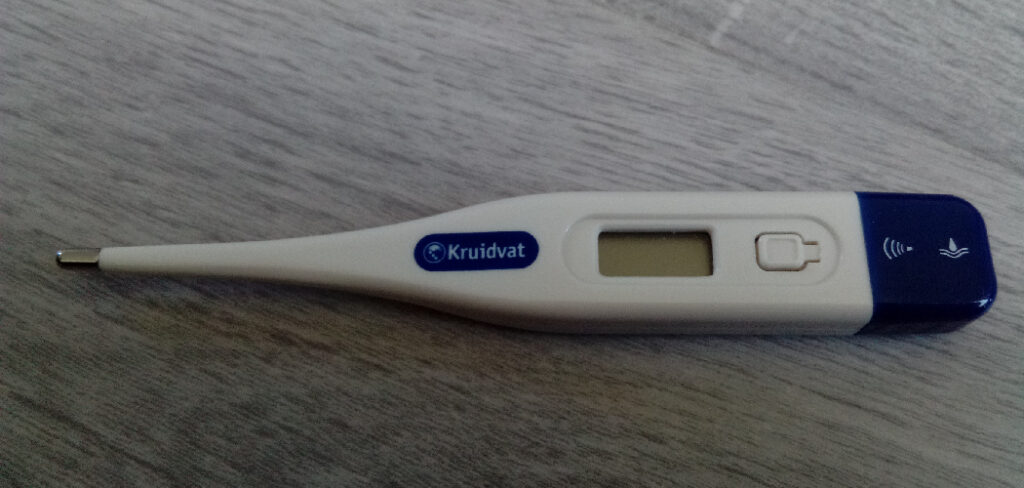
- A digital rectal thermometer: Choose one labeled for rectal use, ideally with a short, flexible tip. Avoid old glass mercury thermometers entirely.
- A water-based lubricant: Petroleum jelly or a personal lubricant works well. It helps the tip slide in smoothly.
- A changing pad or towel: Place this under your baby in case of accidents.
- A clean cloth and warm soapy water: For cleaning the thermometer before and after.
- Rubbing alcohol or an alcohol wipe: To disinfect the tip.
One tip worth following: Keep a thermometer dedicated only to rectal use. Label it clearly so it never gets mixed up with an oral one.
7 Step-by-Step Guide on How to Use a Rectal Thermometer for Baby
Follow these steps slowly. There’s no rush, and a relaxed pace makes everything easier.
Step 1: Clean and prepare the thermometer.
Wash the tip with soap and cool water, then wipe it with rubbing alcohol and let it dry. Apply a small dab of lubricant to the tip.
Step 2: Position your baby.
You have two good options. Lay your baby on their back and lift their legs toward their chest, like during a diaper change. Or place them belly-down across your lap. Pick whichever feels steadier to you.
Step 3: Turn on the thermometer.
Switch it on before insertion and wait for the ready signal. This way you’re not fumbling with buttons during the process.
Step 4: Insert the tip gently.
Spread the buttocks with one hand. With the other, slide the tip in about half an inch to one inch — never force it. If you feel resistance, stop and ease off slightly.
Step 5: Hold it steady and wait.
Keep the thermometer in place with your fingers resting against your baby’s bottom. Most digital models beep in 10 to 30 seconds.
Step 6: Remove and read.
Take out the thermometer gently and check the number. A reading of 100.4°F (38°C) or higher counts as a fever.
Step 7: Clean up.
Wash the tip again with soap and water, disinfect with alcohol, and store it separately. Write down the temperature and the time for your doctor.
Age-Specific Advice
Your baby’s age changes how much rectal readings matter and how you approach them.
Newborn (0–3 months)
This is when rectal temperature is most important. For babies under three months, doctors strongly prefer it because accuracy can guide urgent decisions. Any fever of 100.4°F (38°C) or higher in this age group warrants a call to your doctor right away.
1–3 Months
The same rules apply here. Stick with the rectal method for the most reliable reading. Babies this young still can’t tell you how they feel, so the number does the talking.
3–6 Months
You can keep using a rectal thermometer, and many parents do because it’s so dependable. At this age, you might also start exploring other methods, but rectal still gives you the clearest picture when you want certainty.
6+ Months
Once your baby is past six months, you have more flexibility. Armpit, ear, or forehead thermometers become reasonable options for routine checks. Still, if a reading seems off or your doctor asks for precision, the rectal method remains the most trustworthy.
Common Mistakes to Avoid
A few simple missteps can throw off your reading or make the process harder than it needs to be. Here’s what to watch for.
- Inserting too far: Pushing the tip in more than an inch can hurt your baby and won’t improve accuracy. Half an inch to one inch is plenty.
- Skipping the lubricant: A dry tip is uncomfortable and harder to insert. Always add a small dab first.
- Using the same thermometer for mouth and bottom: This spreads germs. Keep one device dedicated to rectal use only.
- Forcing it when you feel resistance: Never push against pressure. Ease back, reposition, and try again gently.
- Misreading the fever threshold: Some parents panic at 99°F. Remember, a true fever starts at 100.4°F (38°C).
Safety Tips
Keeping things safe is mostly about being gentle and prepared. These reminders help you stay on track.
- Hold your baby securely so a sudden wiggle doesn’t push the thermometer in too far.
- Never leave your baby unattended on a changing table during the process.
- Stop immediately if your baby shows real distress or you feel firm resistance.
- Ditch glass mercury thermometers. If one breaks, it releases toxic mercury. Digital is the safer choice.
- Clean before and after every use to prevent spreading bacteria.
A gentle note: If your baby has recent rectal surgery, certain medical conditions, or your doctor has advised against it, ask before using this method.
Signs You’re Doing It Right
Doubt is normal, especially the first few times. These signs tell you things are going well.
- The thermometer slides in easily with the lubricant and a gentle touch.
- Your baby fusses briefly but settles quickly, which is completely typical.
- You get a clear reading within 30 seconds and the number stays consistent if you check again.
- You feel calmer each time, because muscle memory builds fast.
If your baby cries a little, that doesn’t mean you’ve done something wrong. Most babies simply dislike the unfamiliar feeling, and it passes in moments.
When to Call a Doctor
Knowing the number is only half the picture. Here’s when that number — or your baby’s behavior — means it’s time to reach out.
- Any fever of 100.4°F (38°C) or higher in a baby under 3 months. Call right away, even at night.
- A fever lasting more than 24 hours in a baby 3 to 6 months old.
- A temperature above 102°F (38.9°C) at any age, paired with discomfort.
- Signs of dehydration, such as fewer wet diapers, no tears when crying, or a dry mouth.
- Trouble breathing, a stiff neck, a rash that doesn’t fade when pressed, or a seizure. These need urgent care.
- Unusual sleepiness, limpness, or a baby who’s hard to wake.
When in doubt, trust your instincts. You know your baby better than anyone, and no doctor will mind a cautious call.
Frequently Asked Questions
Is using a rectal thermometer painful for my baby?
No. When you use lubricant and a gentle touch, it doesn’t hurt. Your baby may feel the odd sensation and squirm, but that’s discomfort, not pain.
How far should I insert the thermometer?
About half an inch to one inch — no further. If you meet resistance, stop and reposition rather than pushing.
Can I use the same thermometer in the mouth later?
It’s best not to. Keep one thermometer for rectal use only and another for oral use to avoid spreading germs.
What temperature counts as a fever?
A rectal reading of 100.4°F (38°C) or higher is considered a fever. Anything below that is usually normal.
How often can I take my baby’s temperature this way?
As often as you need to monitor a fever, typically every few hours. There’s no harm in checking, just be gentle each time.
Final Thoughts
Learning how to use a rectal thermometer for baby is one of those parenting skills that feels intimidating at first and becomes second nature surprisingly fast. With the right tools, a calm approach, and a gentle touch, you’ll get an accurate reading in under a minute.
Remember the essentials: lubricate the tip, insert no more than an inch, hold your baby securely, and never force it. A fever of 100.4°F or higher in a newborn means a call to your doctor, but a clear reading gives you the information to act with confidence.
You’ve got this — and every time you care for your little one this carefully, you’re already being the kind of parent your baby needs.

About
Joann Meril didn’t plan on becoming a parenting writer — it found her. After spending several years working as a certified nursing assistant in a pediatric clinic, Joann saw firsthand how anxious and under-informed new parents could feel, even with a hospital full of resources around them. When she had her own two children, that gap became personal. Suddenly she was the one googling things at 2 a.m., comparing baby monitors, and wondering if the swaddle she bought was actually safe.
That experience is what shaped her approach to writing. Joann believes parenting advice should be practical, honest, and free of unnecessary jargon or guilt. She tests products herself whenever possible, reads the actual safety standards instead of just the marketing copy, and isn’t afraid to say when something isn’t worth the money.
Today, Joann writes full-time, covering everything from newborn sleep routines to gear reviews to the small everyday wins that make parenting feel a little less overwhelming. When she’s not researching or writing, she’s usually chasing her own kids around the backyard or drinking coffee that’s gone cold for the third time that morning.
Joann lives in [City/State] with her husband and two children.
Credibility
- Background in pediatric caregiving (CNA)
- Mom of two, hands-on parenting experience
- Hand-tests baby gear before recommending it
- Focus: infant sleep, feeding, gear safety, early development