

You catch your baby crossing their eyes, sitting inches from a toy, or turning their head at an odd angle to look at you. It’s easy to start wondering whether something’s wrong with their vision. The good news is that babies’ eyes are still learning their job, and many quirks are completely normal.
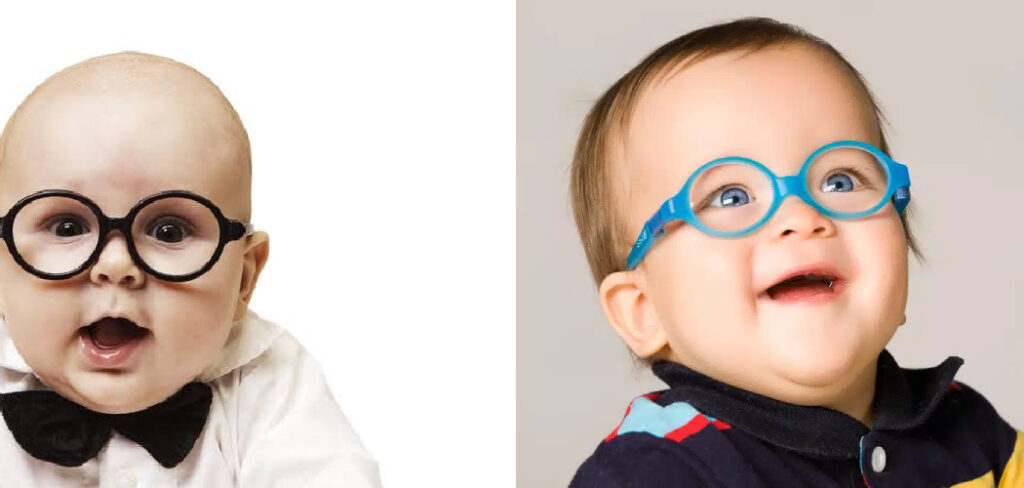
This guide walks you through how to know if your baby needs glasses, what’s typical at each age, and the signs worth watching. You’ll learn how to spot patterns at home, mistakes to avoid, and when to check in with your doctor. The short version: true vision problems in babies are uncommon, and most are very treatable when caught early.
Why This Matters for New Parents
A baby’s vision develops fast in the first year. Their eyes and brain are learning to work together — to focus, track movement, and judge distance. Catching a real problem early gives that system the best chance to develop well.
Here’s the reassuring part. Babies rarely need glasses, and a little eye-crossing or wandering in the early weeks is usually normal. Their eye muscles are simply still building coordination.
Why early attention helps: When one eye doesn’t see clearly, the brain may start to favor the stronger eye. Over time, this can lead to a condition called amblyopia (am-blee-OH-pee-uh) — often called “lazy eye,” where the brain learns to ignore the weaker eye. Spotting issues early means treatment is simpler and more effective.
None of this means you need to worry over every glance. It means knowing what’s typical helps you tell the difference between a passing phase and a pattern worth a closer look.
How to Know if Your Baby Needs Glasses: Spotting Signs at Home
You can observe your baby’s vision during everyday moments. Pick a time when they’re calm, alert, and content — after a nap or feeding usually works best. You’re looking for patterns, not single odd moments.
- Watch how they track objects. Slowly move a toy or your face side to side, about 8 to 12 inches away. By a few months old, your baby should follow it smoothly with both eyes. Jerky tracking or one eye that lags behind is worth noting.
- Check eye alignment. Look at whether both eyes point the same direction when your baby focuses on something. Occasional crossing in the early weeks is normal. A constant turn — inward, outward, up, or down — after about 4 months deserves attention.
- Notice their viewing distance. See whether your baby holds toys very close to their face or leans in unusually close. Some closeness is normal exploration, but a consistent habit of getting extremely close may hint at trouble focusing.
- Look for head tilting or squinting. A baby who always tilts their head one way or squints to see something may be compensating for blurry or doubled vision.
- Watch how their eyes respond to light. Healthy eyes react to changes in light and don’t seem overly bothered by normal indoor brightness. Constant tearing, heavy light sensitivity, or rapid eye jiggling stands out.
- Do a simple “cover” observation. During play, casually notice whether one eye seems to do more of the work. If your baby fusses or turns away when one eye is briefly blocked by a toy but not the other, mention it to your doctor.
A quick reminder: you’re gathering observations, not diagnosing. Your notes simply give your doctor a helpful starting point.
Age-Specific Advice
Vision changes quickly in the first year, so what’s normal shifts with age. Here’s what to expect — and what to watch — at each stage.
Newborn (0 to 4 Weeks)
Newborn vision is blurry by design. Your baby sees best at about 8 to 12 inches — roughly the distance to your face during feeding. Anything farther is fuzzy, and that’s completely normal.
Worth knowing: Eyes may cross or drift occasionally as muscles wake up. This is expected at this age. What stands out is an eye that’s always turned, or eyes that never seem to react to light.
1 to 3 Months
Your baby starts tracking faces and objects and may begin reaching toward things. By around 2 to 3 months, both eyes should move together more smoothly.
Now is a good time to watch tracking. Steady eye contact and following a slowly moving toy are positive signs. Eyes that frequently wander in different directions are worth mentioning.
3 to 6 Months
Eye coordination should be much stronger by now. Your baby likely reaches accurately for toys and recognizes familiar faces across the room.
A simple check: Roll a ball or move a toy at varying distances and watch how your baby follows it. Difficulty shifting focus between near and far, or a persistent eye turn, is a sign to share with your doctor.
6 Months and Beyond
By six months, eye alignment should be consistent — no more regular crossing or drifting. Depth perception is developing, helping your baby judge distances as they grab and explore.
If you still see a constant eye turn, frequent squinting, or one eye that seems weaker, bring it up. Many pediatric groups also recommend a first vision screening around this age, even when everything looks fine.
Common Mistakes to Avoid
A few common missteps can make vision concerns harder to spot or slower to address. Here are the ones parents run into most.
- Panicking over early eye-crossing. Occasional crossing in the first few months is normal as muscles develop. Watch for a constant turn after 4 months rather than reacting to every glance.
- Waiting for your baby to “tell” you. Babies can’t say their vision is blurry — they don’t know any different. Rely on observing their behavior, not on expecting complaints.
- Skipping well-baby checkups. Routine visits include basic eye checks that catch many issues early. Keeping these appointments matters even when nothing seems wrong.
- Assuming good vision means no glasses ever. Some babies need glasses to correct focus or to prevent a lazy eye, even without obvious symptoms. Trust screenings, not just appearances.
- Comparing too closely to other babies. Vision develops on its own timeline. Look at your baby’s overall progress rather than measuring against a friend’s child.
Signs You’re Doing It Right
It helps to know what healthy baby vision looks like. If you notice these, things are likely on track.
- Steady eye contact. Your baby looks at your face and holds your gaze during feeding and play.
- Smooth tracking. Both eyes follow a moving toy or face together, without one lagging behind.
- Reaching with purpose. By a few months, your baby reaches toward objects and grabs them with growing accuracy.
- Aligned eyes. After about four months, both eyes point the same direction when focusing.
- Curiosity about surroundings. Your baby notices people, lights, and objects across the room and turns to look.
Seeing these signs means your baby’s eyes and brain are learning to work together nicely. You’re observing, engaging, and keeping up with checkups — exactly what your little one needs.
When to Call a Doctor
Most early eye quirks fade on their own. Still, certain signs are worth a conversation with your doctor, and a few call for prompt attention.
Mention at your next visit:
- An eye that consistently turns in, out, up, or down after 4 months
- Eyes that don’t track objects smoothly by 3 months
- A habit of holding objects extremely close or leaning in to see
- Frequent head tilting or squinting to focus
- One eye that seems weaker or that your baby protests when it’s covered
Call your doctor sooner if you notice:
- Eyes that never seem to follow light or faces
- A white or cloudy appearance in the pupil, especially in photos
- Constant tearing, heavy crusting, or strong light sensitivity
- Rapid, repetitive eye jiggling or fluttering
- Eyes that bulge, or eyelids that droop and block vision
A white reflection in the pupil — instead of the usual “red eye” in flash photos — is uncommon but deserves a quick call to rule out other causes. Trust your instincts. If something feels off, reaching out is always reasonable.
Frequently Asked Questions
How can I tell if my baby just has crossed eyes or a real vision problem?
Occasional eye-crossing in the first few months is normal as eye muscles strengthen. A vision concern shows up as a constant eye turn after about 4 months, or eyes that don’t track together. A consistent pattern, rather than an occasional one, is the key clue.
Can babies really wear glasses?
Yes. Babies can wear glasses made with soft, flexible frames and shatter-resistant lenses designed to stay put. Doctors prescribe them to correct focus or to help prevent a lazy eye. Most babies adjust faster than parents expect.
When should my baby have their first eye exam?
Your pediatrician checks your baby’s eyes at routine well-baby visits from birth onward. Many eye care groups also recommend a more thorough screening around 6 to 12 months. If you notice any warning signs, ask for a check sooner.
Does my baby need glasses if vision problems run in the family?
A family history of needing glasses early, lazy eye, or eye turns does raise the chances. It doesn’t guarantee your baby will need them, but it’s worth mentioning to your doctor so they can watch a little more closely.
Will a vision problem affect my baby’s development?
When caught and treated early, most vision issues don’t cause lasting problems. Left unaddressed, blurry or unequal vision can slow skills like reaching, crawling, and hand-eye coordination. Early care helps your baby develop on track.
Final Thoughts on How to Know if Your Baby Needs Glasses
Spotting a vision concern usually comes down to noticing a pattern — a constant eye turn, trouble tracking, or a habit of getting very close to see. If that sounds familiar, take a breath. True problems are uncommon, and they respond well to early, gentle care.
You don’t need to be an expert to support your baby’s eyes. By watching how they look at the world, keeping up with checkups, and asking questions when something feels off, you’re already doing exactly what they need. Trust your instincts, stay curious, and know that most babies’ eyes grow stronger and clearer with every passing month.

About
Joann Meril didn’t plan on becoming a parenting writer — it found her. After spending several years working as a certified nursing assistant in a pediatric clinic, Joann saw firsthand how anxious and under-informed new parents could feel, even with a hospital full of resources around them. When she had her own two children, that gap became personal. Suddenly she was the one googling things at 2 a.m., comparing baby monitors, and wondering if the swaddle she bought was actually safe.
That experience is what shaped her approach to writing. Joann believes parenting advice should be practical, honest, and free of unnecessary jargon or guilt. She tests products herself whenever possible, reads the actual safety standards instead of just the marketing copy, and isn’t afraid to say when something isn’t worth the money.
Today, Joann writes full-time, covering everything from newborn sleep routines to gear reviews to the small everyday wins that make parenting feel a little less overwhelming. When she’s not researching or writing, she’s usually chasing her own kids around the backyard or drinking coffee that’s gone cold for the third time that morning.
Joann lives in [City/State] with her husband and two children.
Credibility
- Background in pediatric caregiving (CNA)
- Mom of two, hands-on parenting experience
- Hand-tests baby gear before recommending it
- Focus: infant sleep, feeding, gear safety, early development